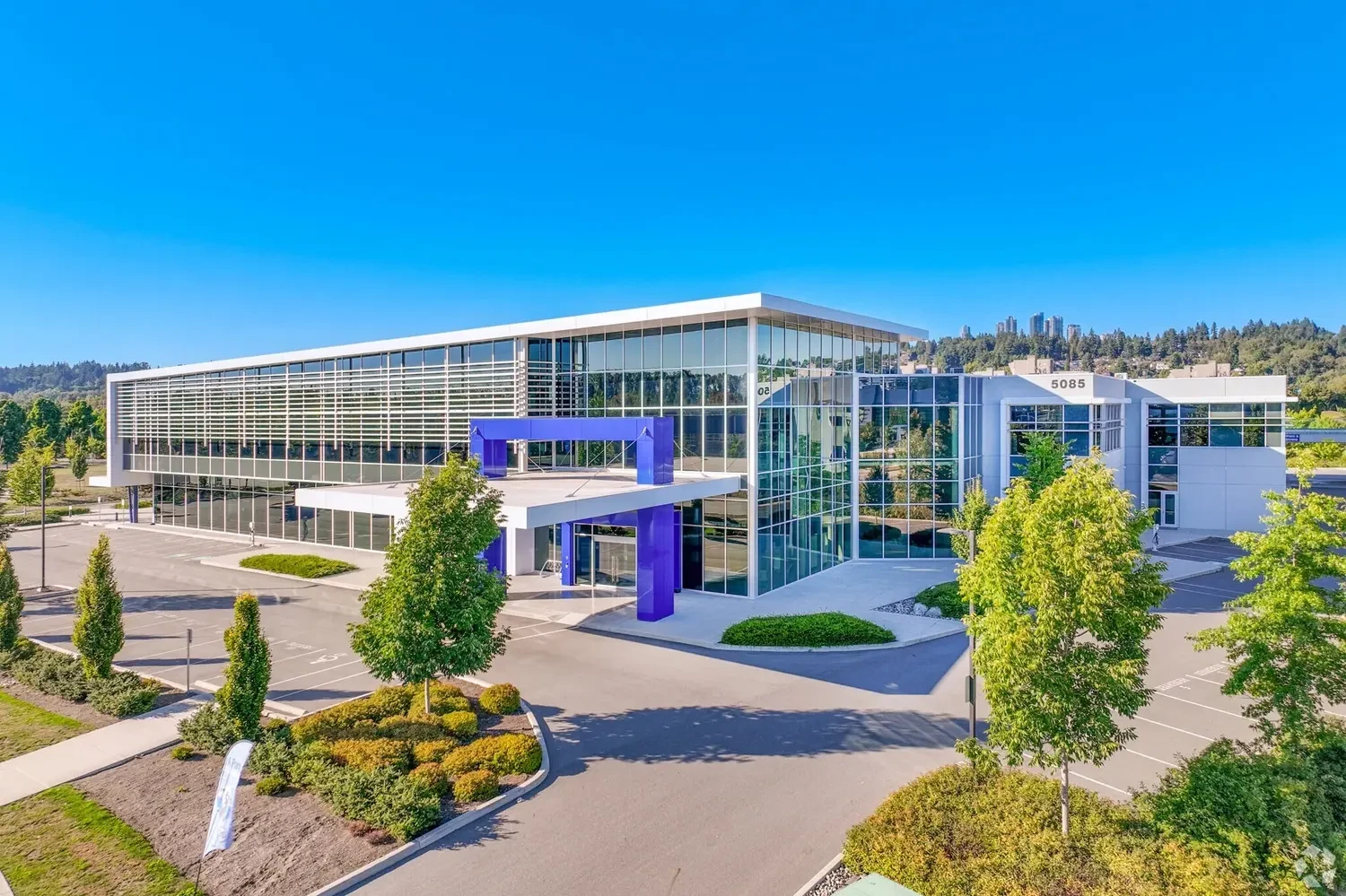
Burnaby's industrial inventory sits at a geographic crossroads — positioned between Vancouver's constrained core and the larger-format distribution hubs of Surrey and Delta. For tenants seeking central access without premium Vancouver pricing, and for investors targeting stable income in infill locations, Burnaby's three primary industrial nodes each present distinct characteristics. This guide examines Big Bend, Lake City, and Still Creek as they stand in late 2026, with practical insights for owners, occupiers, and investors navigating these submarkets.
Burnaby Industrial at a Glance: Market Position
Burnaby accounts for approximately 28 million square feet of industrial inventory across its three main nodes, making it Metro Vancouver's third-largest industrial municipality behind Surrey and Richmond. Its central location offers practical advantages: access to the Port of Vancouver, Vancouver International Airport, and the Highway 1 corridor that connects the Fraser Valley distribution network.
As of Q3 2026, Burnaby's overall industrial vacancy rate sits at approximately 2.8%, slightly above the Metro Vancouver average of 2.4% but well below what would constitute a balanced market. This modest differential reflects two factors: first, Burnaby's older building stock creates periodic availability as legacy tenants relocate to newer facilities; second, the limited new construction pipeline has prevented the absorption volatility seen in emerging submarkets like Campbell Heights or Langley.
Average asking net rental rates across Burnaby industrial range from $22.00 to $28.00 per square foot, depending on building quality, clear height, and submarket. This positions Burnaby between Vancouver-proper industrial (where rates commonly exceed $32.00 PSF) and South Fraser options (typically $18.00 to $24.00 PSF for comparable space).
Big Bend: Heavy Industrial and Distribution Along the Fraser
Big Bend occupies Burnaby's southern boundary along the Fraser River, extending from Boundary Road to approximately Cariboo Road. This area represents Burnaby's heaviest industrial concentration, with approximately 9 million square feet of inventory characterized by larger floor plates, outdoor storage capability, and M-2 zoning that permits manufacturing and production uses often restricted elsewhere.
The submarket's building stock skews older — many structures date to the 1970s and 1980s — but this has created opportunities for value-add investors and tenants requiring affordable space with heavy power or outdoor staging. Clear heights typically range from 18 to 24 feet, with some newer infill developments achieving 28 feet.
Current asking rates in Big Bend range from $20.00 to $25.00 PSF net for standard warehouse space, with premiums for units offering crane service or significant yard. Vacancy in Q3 2026 hovers around 3.2%, with recent absorption driven by construction material suppliers, food processing operators, and regional distribution tenants displaced from more expensive Vancouver locations.
For investors, Big Bend presents a nuanced picture. Cap rates for single-tenant industrial assets with term remaining have compressed to the 4.75% to 5.25% range, reflecting institutional appetite for infill industrial regardless of building age. However, assets with near-term lease expiry or significant deferred maintenance trade at wider spreads, creating potential repositioning opportunities.
Lake City: Urban Infill and Flex Industrial
Lake City occupies the northeastern quadrant of Burnaby, bounded roughly by Lougheed Highway to the south and the Burnaby-Coquitlam border to the east. This submarket differs meaningfully from Big Bend: buildings are generally smaller (10,000 to 40,000 SF typical), zoning accommodates a broader mix of light industrial and flex uses, and tenant composition skews toward service-oriented businesses rather than heavy distribution.
The Lake City industrial node contains approximately 6 million square feet of inventory, much of it in multi-tenant strata or multi-bay configurations. This structure creates active transaction volume in the strata market, where owner-users compete for units ranging from 2,500 to 8,000 SF.
Strata pricing in Lake City has stabilized through 2026 after the appreciation of prior years, with units trading between $550 and $700 PSF depending on condition, parking, and loading configuration. For tenants leasing space, asking rates range from $24.00 to $28.00 PSF net, reflecting the submarket's proximity to residential catchments and SkyTrain access at Lake City Way station.
The tenant base includes printing and graphics operations, mechanical contractors, specialty food producers, and last-mile logistics operators serving Burnaby and Northeast Vancouver. For these users, Lake City offers a rare combination: relatively affordable space within a 20-minute drive of downtown Vancouver.
Still Creek: The Technology and Media Corridor
Still Creek runs along the Highway 1 corridor between Boundary Road and Willingdon Avenue, encompassing what many consider Burnaby's most evolved industrial node. The submarket has transitioned over the past decade from traditional warehouse uses toward higher-value occupancies including film and television production, technology companies, and creative industries.
This evolution reflects both market forces and municipal policy. The City of Burnaby has encouraged intensification along the Still Creek corridor, permitting mixed industrial-commercial developments and accommodating the infrastructure requirements of media production facilities. The presence of several major studios has catalyzed supporting uses — equipment rental, post-production services, and specialty fabrication — that pay premium rents for proximity.
Current asking rates in Still Creek range from $26.00 to $32.00 PSF net, the highest among Burnaby's industrial nodes. Vacancy sits at approximately 2.1%, reflecting strong demand and limited new supply. For traditional warehouse users, Still Creek has become increasingly competitive; tenants seeking standard distribution space often find better value in Big Bend or Lake City.
Investment activity in Still Creek has been characterized by redevelopment plays and income growth strategies. Assets with below-market rents have attracted investors betting on mark-to-market upside, while development sites have traded at premiums reflecting potential for higher-density industrial or mixed-use configurations.
Comparative Analysis: Matching Tenant Needs to Submarket Strengths
For tenants evaluating Burnaby options, the choice among these three submarkets typically comes down to operational requirements:
- Heavy manufacturing, outdoor storage, or distribution requiring large floor plates: Big Bend offers the most suitable zoning, lot configurations, and rental economics.
- Service-oriented businesses, small-bay requirements, or owner-user purchases: Lake City provides appropriate inventory and active strata availability.
- Media production, technology, or uses benefiting from Highway 1 visibility and modern building stock: Still Creek commands premium rates but delivers premium positioning.
For investors, each submarket presents a different risk-return profile. Big Bend offers value-add potential in older buildings but requires careful assessment of environmental considerations given historical industrial uses along the Fraser. Lake City strata investments benefit from strong owner-user demand but face liquidity constraints typical of smaller assets. Still Creek offers the strongest rental growth trajectory but at pricing that compresses yields.
Practical Takeaways for 2026
Burnaby's industrial market in late 2026 remains characterized by structural supply constraints and sustained tenant demand. Unlike emerging submarkets where new construction is reshaping competitive dynamics, Burnaby's three core nodes have reached effective build-out — meaningful new supply would require redevelopment of existing industrial land, a process that faces economic and regulatory hurdles.
For occupiers, this means approaching Burnaby lease negotiations with realistic timelines. Quality availabilities, particularly in the 15,000 to 50,000 SF range, lease quickly. Tenants requiring specific configurations or submarket locations should engage the market 12 to 18 months before lease expiry rather than waiting for options to materialize.
For investors, Burnaby industrial offers the stability of infill positioning without the volatility of emerging supply. The trade-off is yield compression and limited acquisition opportunities — patience and off-market relationships often prove essential. Through NAI Commercial Vancouver's regional presence and the broader NAI Global network, we maintain visibility into both marketed and privately held Burnaby industrial assets, assisting clients in identifying opportunities aligned with their investment criteria.
Whether your focus is Big Bend's heavy industrial character, Lake City's accessible flex inventory, or Still Creek's premium positioning, understanding each submarket's nuances enables more informed decisions in a competitive environment.