Service
Industrial Land.
Land scarcity is the defining feature of Metro Vancouver industrial.
Got a industrial land question? Talk to Samuel directly. No gatekeepers, no forms required.
Overview
What Industrial Land covers
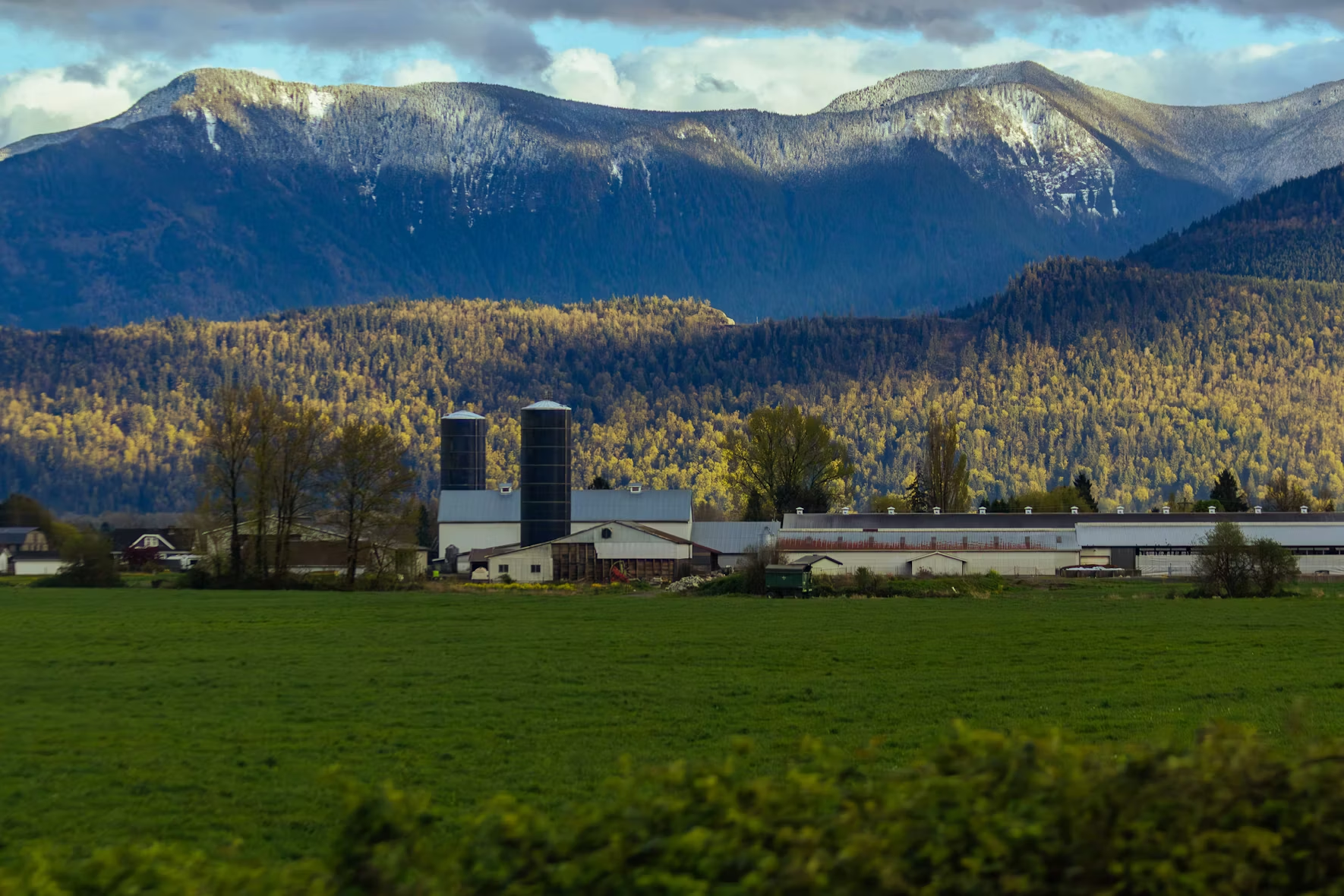
Industrial land in Metro Vancouver is structurally scarce. The Agricultural Land Reserve (ALR), municipal land-use planning, geographic constraints, and broader urbanization pressure have reduced the available industrial land base. Sites worth pursuing rarely list publicly. Sourcing requires relationships with landowners, developers, and municipalities - and the patience to wait for the right one. Acquiring industrial land successfully requires a long view and a broker actively in the market.
The Process
How the process works
01.
Land Strategy Definition
Document the land requirement - size, zoning, servicing, location criteria, holding strategy or build-out plan, capital envelope, timeline.
02.
Submarket & Site Sourcing
Active sourcing through landowner relationships, developer outreach, and municipal channels. Most viable sites are off-market.
03.
Zoning & Servicing Due Diligence
Zoning bylaw confirmation, servicing capacity verification, environmental flags, ALR boundaries, and developmental constraints assessment.
04.
Build-to-Suit Partner Sourcing
Where applicable, introduction to industrial developers for build-to-suit transactions, lease-back structures, or development partnership.
05.
Offer & Negotiation
Land contract negotiation including price, deposit, due diligence period, conditions, and closing structure.
06.
Closing & Development Coordination
Coordination through diligence, financing, and closing. Hand-off to development partners where build-to-suit is in scope.
Who This Is For
Who this service is for
- Operators with manufacturing or distribution requirements needing build-to-suit
- Investors acquiring industrial land for hold or development
- Developers acquiring sites for speculative or pre-leased construction
- Owner-users seeking land for owner-developed facilities
- Family offices and private capital allocating to industrial land
What You Get
What you receive
- Land requirement documentation
- Off-market site sourcing through landowner relationships
- Zoning, servicing, and environmental due diligence support
- Build-to-suit developer introductions where applicable
- Offer negotiation and contract structuring
- Closing coordination with legal, financing, and DD partners
When to Engage
When to engage
For active acquisition needs, engage 12 to 36 months ahead of required occupancy or development start. Industrial land transactions routinely take 6 to 18 months from sourcing to closing, with build-to-suit development adding 12 to 24 months to occupancy. Investors and developers seeking strategic land holdings should engage on an ongoing basis - the strongest sites surface through continuous market presence.
Why Me
Why work with me
I focus exclusively on industrial, and land is part of that. Most viable industrial sites in Metro Vancouver are off-market, so I work landowner outreach, developer contacts, and municipal channels directly rather than waiting for listings. I track zoning, servicing, and ALR constraints by submarket. Through NAI Commercial Vancouver I can introduce developers where a build-to-suit or partnership structure makes more sense than buying land.
Frequently Asked Questions
Industrial Land, answered.
How do I find industrial land for sale in Metro Vancouver?
Most viable industrial land in Metro Vancouver transacts off-market. Public listings capture a small fraction of actual transactions. Effective sourcing requires direct landowner relationships, developer networks, and municipal contacts. Buyers should engage well before they need a site and accept that timing depends on availability rather than predictable inventory.
What's the ALR and how does it affect industrial land in Metro Vancouver?
The Agricultural Land Reserve is a provincial designation protecting agricultural land from non-agricultural use. ALR boundaries constrain industrial land supply in several Metro Vancouver submarkets - Delta, Richmond, Surrey, and Langley have meaningful ALR coverage. ALR exclusions require provincial approval and are unpredictable. The constraint supports long-term industrial land value but limits supply.
How does build-to-suit work for industrial users?
Build-to-suit transactions involve a developer constructing a facility to your specifications, with you signing a long-term lease (typically 10 to 15 years) on completion. Some structures include eventual ownership transfer. BTS provides custom specifications without owner-developer capital commitment. Negotiating the BTS structure - specifications, schedule, rent structure, exit options - requires careful broker and legal support.
What zoning do I need for an industrial business in Metro Vancouver?
Industrial zoning in Metro Vancouver varies by municipality and typically includes IL (light industrial), IB (business industrial), IC (industrial commercial), IH (heavy industrial), and various municipal designations. Zoning permitted uses, density restrictions, and outdoor storage allowances differ meaningfully. Operators should confirm zoning compatibility before committing to a site - variances are not guaranteed.