Greater Vancouver Submarket
Langley.
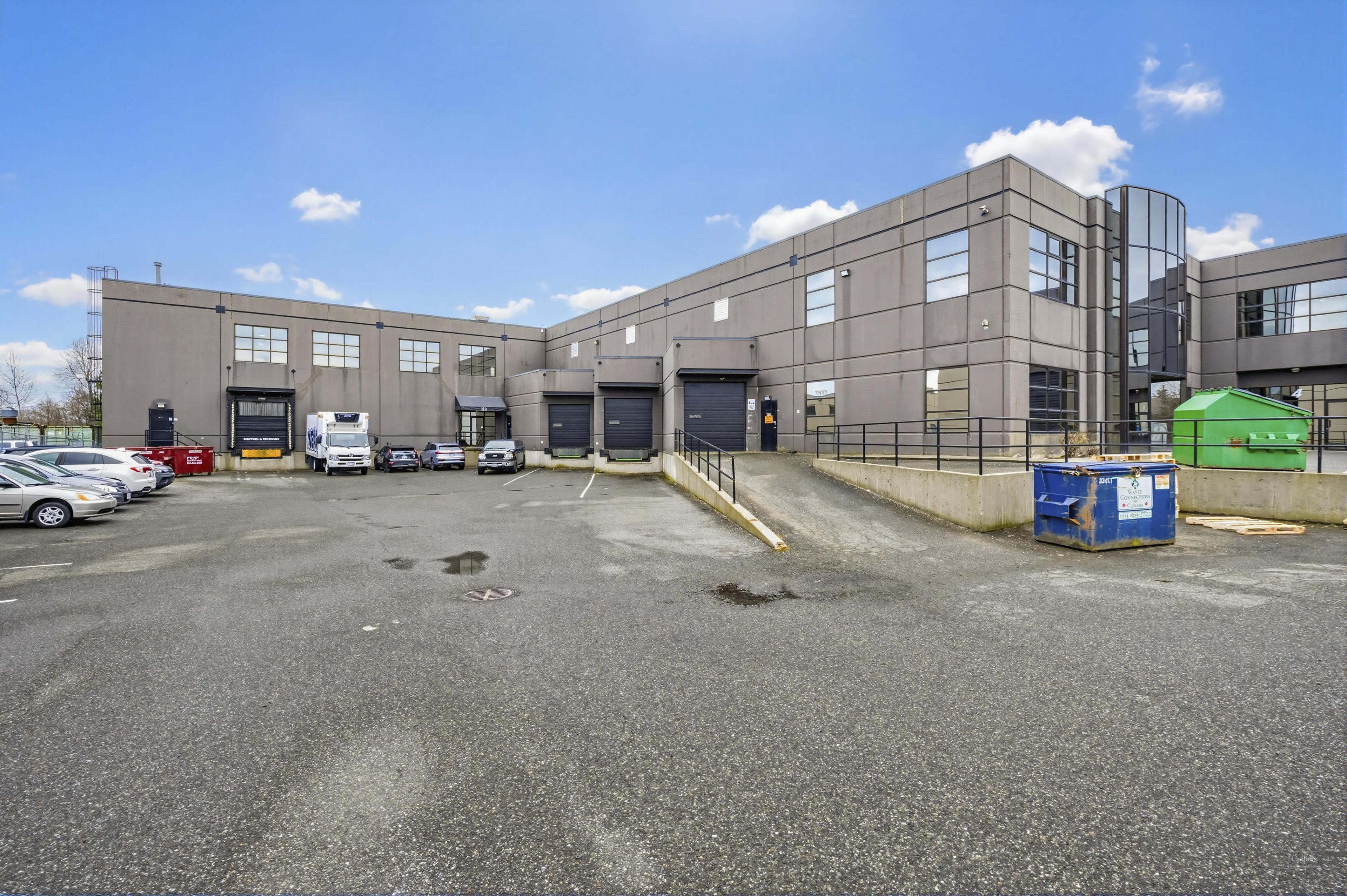
Large-format industrial space and land in Langley.
Overview
Langley industrial market overview
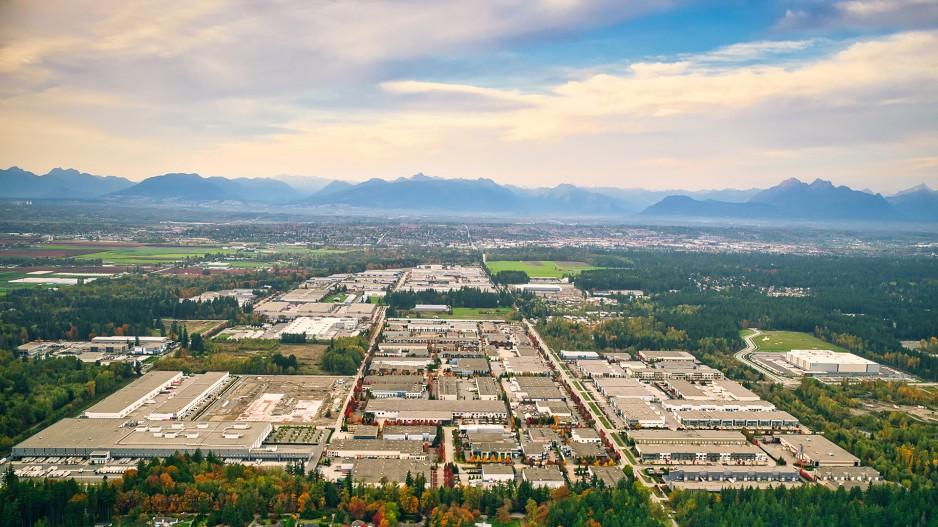
Langley sits on the eastern edge of the active Metro Vancouver industrial market and serves as the primary frontier for greenfield large-format industrial development. Gloucester Industrial Estates, Aldergrove, and the Highway 1 corridor concentrate the bulk of new construction. The submarket suits operators willing to trade western proximity for newer buildings, larger contiguous footprints, and ALR-bordered land that simply isn't available in Surrey, Richmond, or Burnaby.
Market Snapshot
Key metrics for Langley.
- Lease Range
- $19.20 PSF net average asking (Q2 2026); $18.62 – $19.63 across reports
- Vacancy
- 5.3% average (Q2 2026); 7.5% availability after a large block returned to market
- Clear Heights
- 32 – 40 ft in new development
- Asset Mix
- Large-format distribution, manufacturing, agricultural-industrial
- Land Availability
- More available than western submarkets; ALR constrains
Defining Characteristics
What makes Langley distinct.
- Most active Fraser Valley industrial submarket
- Highway 1 corridor and Trans-Canada access
- US border via Aldergrove crossing
- Larger contiguous parcels than western submarkets
- Lower lease rates and land cost
- Agricultural-industrial interface (ALR boundaries)
Typical Tenant Base
Who occupies space here.
- Large-format distribution and 3PL
- Manufacturing and assembly
- Building materials and trades
- Agricultural-industrial (food processing, cold storage)
- Equipment distribution and service
- Construction and yard-intensive operators
Notable Industrial Areas
Where the industrial inventory clusters.
The key industrial nodes within Langley, where availability, leasing activity, and tenant turnover concentrate. Click any pin for details.
Loading map…
- 01
Industrial Node
Gloucester Industrial Estates
- 02
Industrial Node
Aldergrove industrial
- 03
Industrial Node
200th Street corridor
- 04
Industrial Node
Highway 10 industrial frontage
- 05
Industrial Node
Walnut Grove industrial
Why I Work Langley
Working in Langley industrial
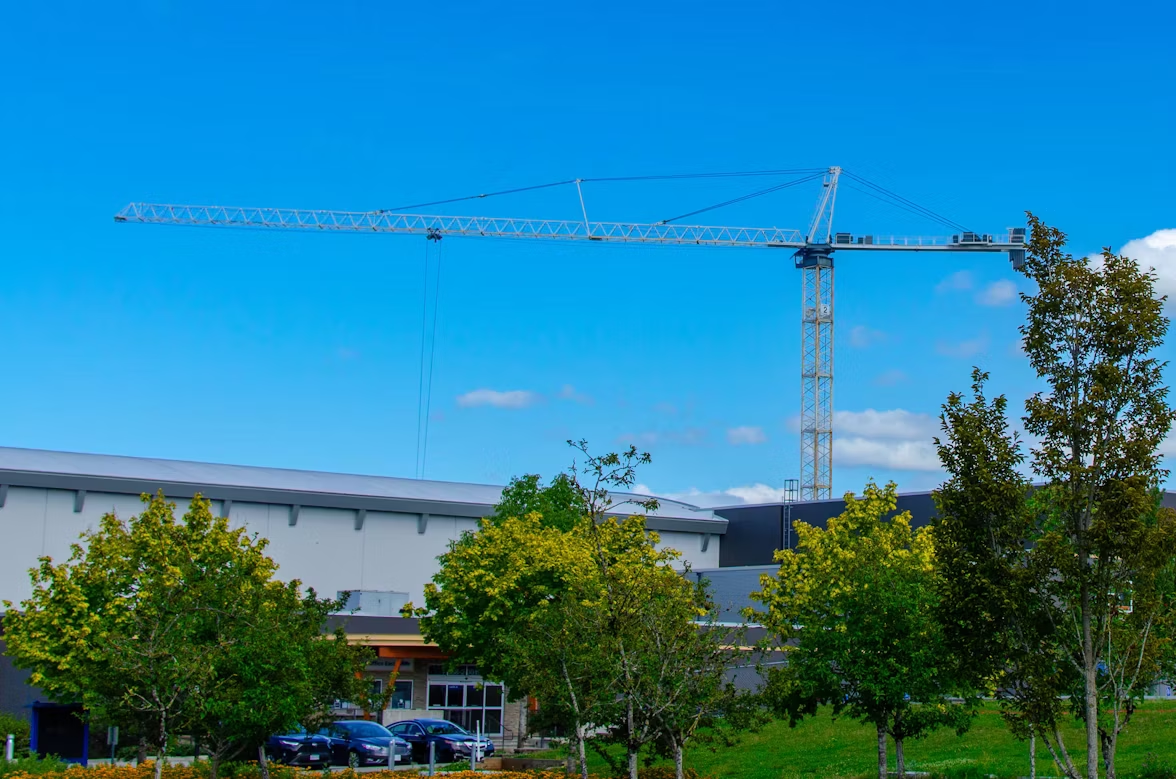
Langley is a trade-off: lower occupancy cost and larger sites in exchange for more commute time to western delivery markets. I focus exclusively on industrial sales and leasing and follow the Langley development pipeline across Gloucester Industrial Estates, Aldergrove, and the Highway 1 corridor. Pre-leasing new inventory before construction completion often produces the strongest economics, so I track delivery timing, availability, and recent comparables closely. Through NAI Commercial Vancouver I can also reach Langley developers and landowners about sites that are not publicly listed.
Tenants should model the labour catchment carefully - Langley's residential growth supports strong local labour, but commutes from western submarkets are meaningful. ALR boundaries shape long-term supply, and the available industrial land outside ALR is finite. Owner-users with patience and long-term holds have strong opportunities in Gloucester and Aldergrove strata and freestanding markets.
Frequently Asked Questions
Langley industrial, answered.
Why choose Langley over Surrey for distribution?
On Q2 2026 asking rents Langley is not cheaper than Surrey, averaging about $19.20 PSF net against $18.66, because much of its available stock is new Class A. The advantage is larger contiguous footprints, newer buildings and land. For operators whose distribution doesn't depend on Vancouver-proper proximity, that combination can still deliver better economics once building efficiency is counted.
What's Gloucester Industrial Estates?
Gloucester Industrial Estates is a major industrial node in north Langley, hosting both legacy and modern Class A industrial inventory. The area combines strong Highway 1 access, larger contiguous parcels than western submarkets, and a mix of tenant operations from distribution to manufacturing to building materials.
Is Langley industrial land available for owner-user purchase?
Langley has more industrial land availability for owner-user acquisition than the western submarkets, particularly in Gloucester and Aldergrove. ALR boundaries constrain total supply, but the remaining inventory provides meaningful opportunities for operators with stable long-term occupancy plans and growth horizons.
How far is Langley from the Vancouver core for distribution?
Langley is approximately 50 to 70 minutes from Vancouver core in typical traffic, depending on submarket and time of day. For pure distribution serving the broader Lower Mainland and US border flows, the distance is operationally manageable. For last-mile to Vancouver, the distance is meaningful and may not suit the use case.