Greater Vancouver Submarket
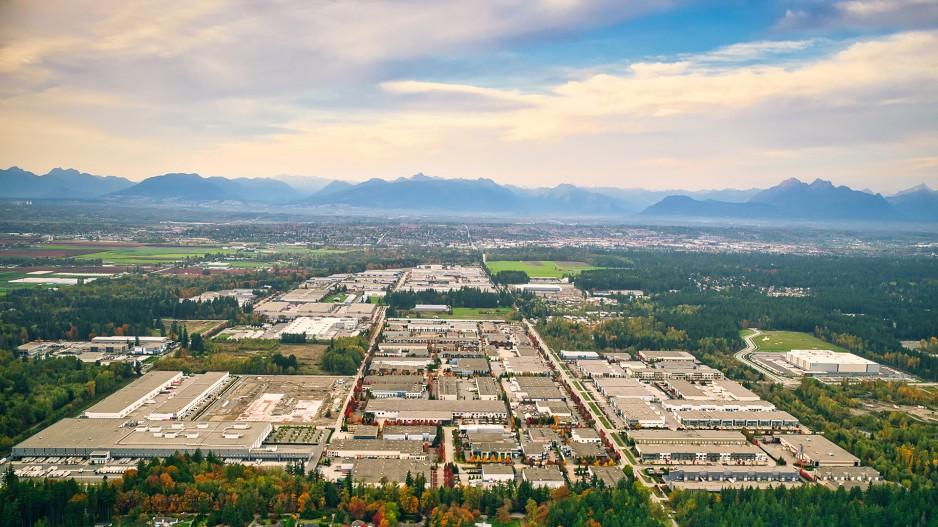
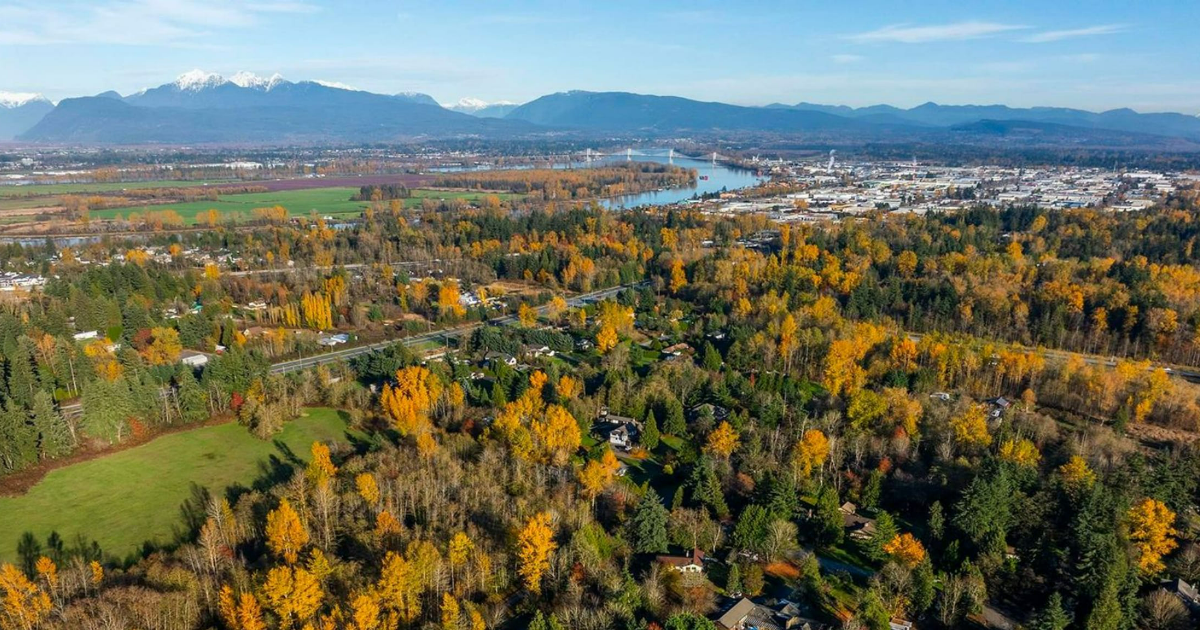
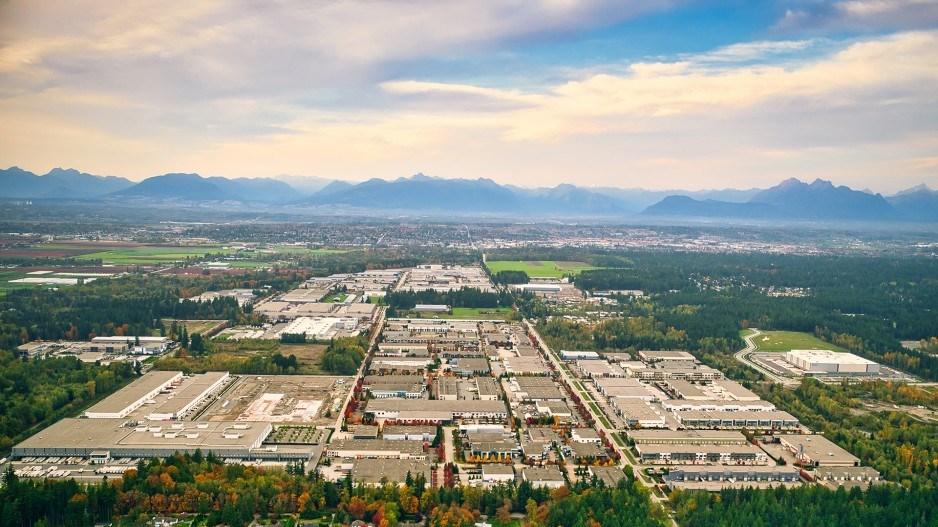
Campbell Heights.
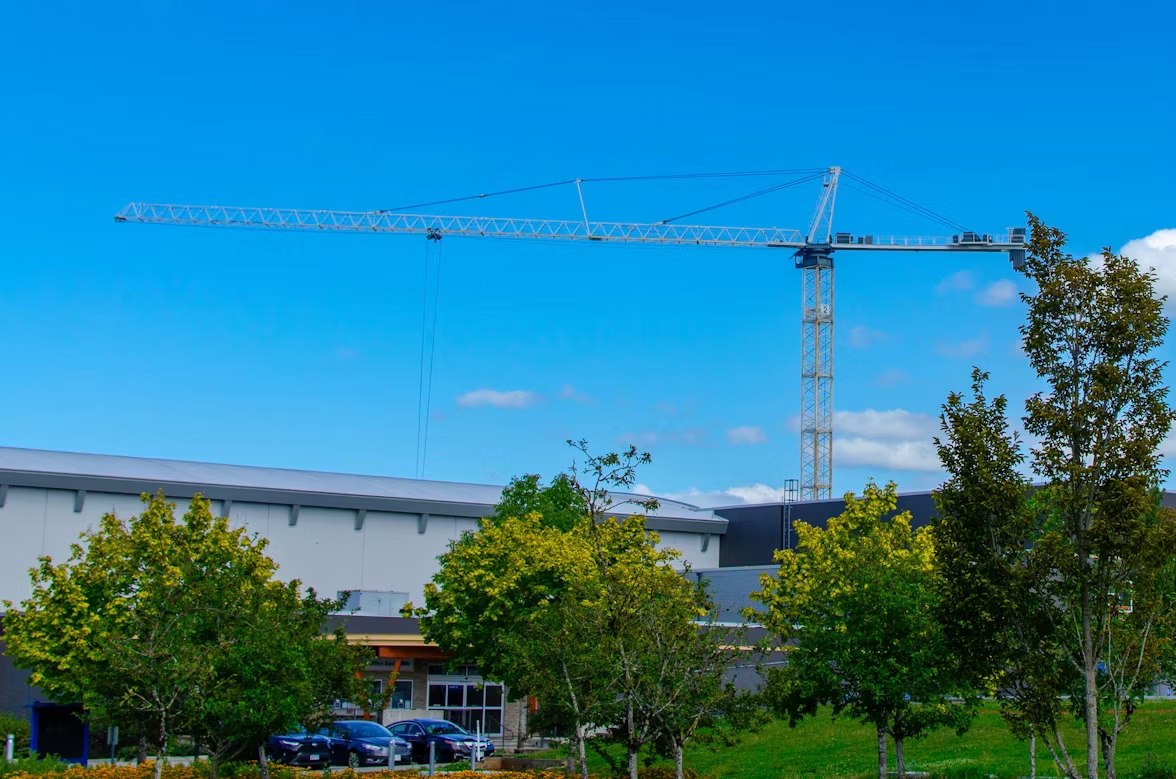
Class A industrial space in Campbell Heights, South Surrey.
Overview
Campbell Heights industrial market overview
Campbell Heights is South Surrey's master-planned industrial business park and has become the de facto Class A industrial standard in the eastern Lower Mainland. The submarket combines modern large-bay and mid-bay distribution, manufacturing, and flex industrial inventory, with consistent building specifications, planned roadway infrastructure, and a curated tenant mix. Lease economics command a small premium over comparable Port Kells product, reflecting the master-planned environment and stronger building image.
Market Snapshot
Key metrics for Campbell Heights.
- Lease Range
- Surrey averaged $18.66 PSF net asking in Q2 2026; Campbell Heights Class A at the upper end
- Vacancy
- Surrey averaged 3.8% (Q2 2026); consistent absorption
- Clear Heights
- 32 – 40 ft in new product
- Asset Mix
- Class A distribution, mid-bay multi-tenant, manufacturing, flex
- Land Availability
- Active build-out; finite remaining within park boundaries
Defining Characteristics
What makes Campbell Heights distinct.
- Master-planned business park environment
- Consistent Class A building specifications
- Planned roadway and utility infrastructure
- Highway 99 and Highway 15 (US border) access
- Curated tenant mix and brand-conscious occupiers
- Strong amenity availability
Typical Tenant Base
Who occupies space here.
- Class A distribution and 3PL
- Manufacturing and assembly
- Building materials and equipment
- Specialty industrial and flex
- Owner-user occupiers (strata inventory available)
- Cross-border distribution and customs operations
Notable Industrial Areas
Where the industrial inventory clusters.
The key industrial nodes within Campbell Heights, where availability, leasing activity, and tenant turnover concentrate. Click any pin for details.
Loading map…
- 01
Industrial Node
Campbell Heights North
- 02
Industrial Node
Campbell Heights South
- 03
Industrial Node
186th Street industrial corridor
- 04
Industrial Node
32nd Avenue industrial frontage
- 05
Industrial Node
Croydon Drive corridor
Why I Work Campbell Heights
Working in Campbell Heights industrial
Campbell Heights is a master-planned business park where building specifications drive real differences in occupancy cost. I focus exclusively on industrial sales and leasing and track the Campbell Heights development pipeline, pre-leasing inventory, and recent comparables closely. I help clients compare Class A distribution, mid-bay, and flex options in the park on rent, specifications, and timing. Operators considering Campbell Heights should start 6 to 18 months ahead of any occupancy requirement. Through NAI Commercial Vancouver I can bring requirements to the institutional landlords delivering new inventory.
Tenants should compare Campbell Heights against Port Kells on roadway access, rail availability (Port Kells advantage), and master-planned environment (Campbell Heights advantage). Owner-users should evaluate strata acquisition opportunities - Campbell Heights strata has shown strong long-term appreciation and remains liquid.
Frequently Asked Questions
Campbell Heights industrial, answered.
What makes Campbell Heights different from other Surrey industrial submarkets?
Campbell Heights is master-planned, with consistent building specifications, planned roadway infrastructure, and a curated tenant mix. Other Surrey submarkets - Port Kells, Newton, Cloverdale - offer a more mixed environment of legacy and new product. Campbell Heights commands a small premium for the consistency and image, which justifies itself for many brand-conscious occupiers.
What lease rate should I expect in Campbell Heights?
Class A distribution in Campbell Heights leases around and above the Surrey average of $18.66 PSF net asking (Q2 2026 brokerage reports), depending on size, configuration, and specifications. Operating costs run about $5.50 to $6.60 PSF. The combined occupancy cost is comparable to Port Kells with a small premium for the master-planned environment.
Can I buy strata industrial in Campbell Heights?
Yes - Campbell Heights has modern strata industrial inventory, particularly suited to owner-users in the 5,000 to 30,000 SF range. The strata market has shown consistent appreciation and remains liquid. For stable owner-users, Campbell Heights strata typically delivers strong long-term economics.
How does Campbell Heights handle US border-bound freight?
Campbell Heights sits 15 minutes from the Pacific Highway truck crossing at Surrey's southern border, making it among the strongest Metro Vancouver submarkets for US-bound freight flows. Customs operators, cross-border distributors, and FTZ-style operations frequently cluster here for this reason.
Related Submarkets