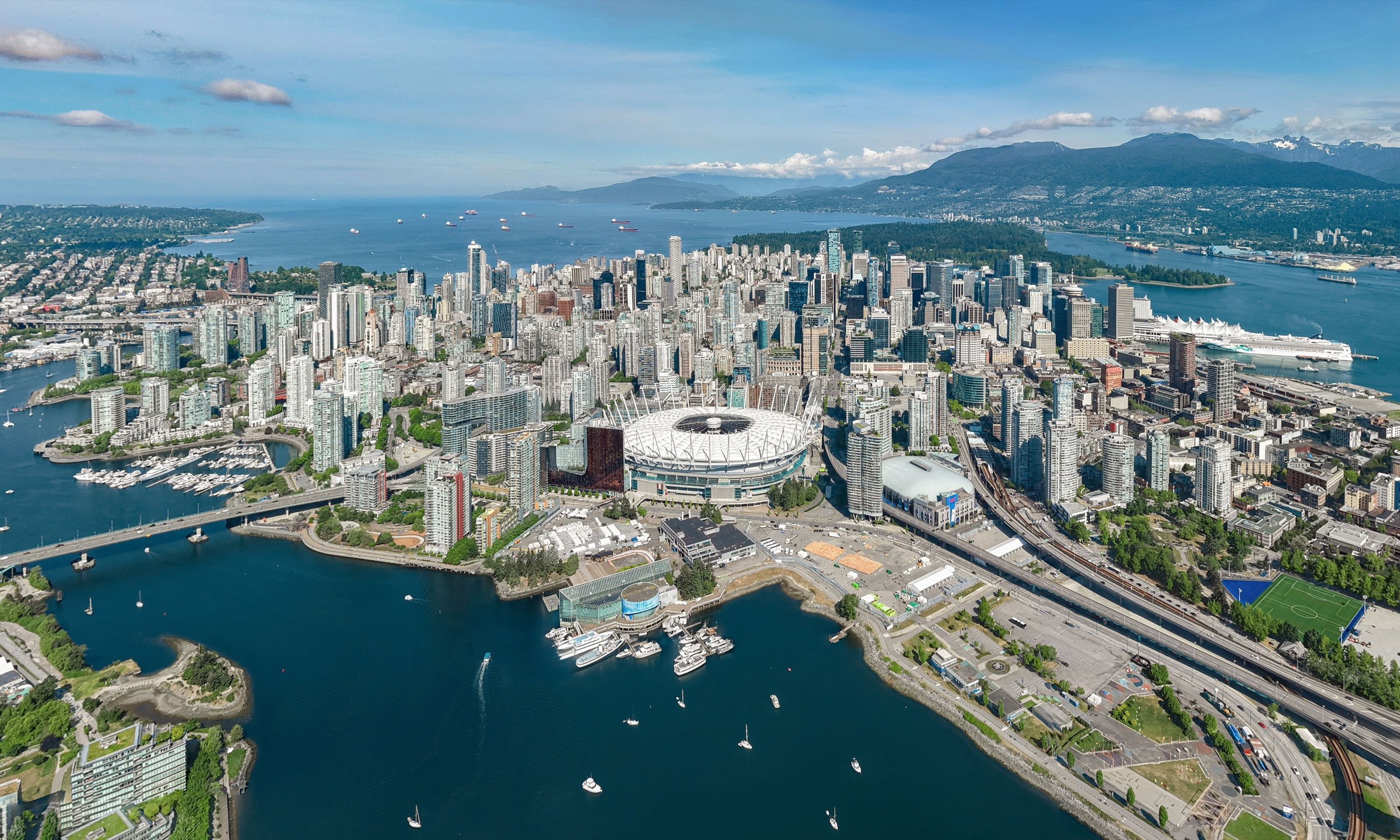
Vancouver-proper remains Metro Vancouver's most constrained industrial submarket by geography, but the headline numbers tell a more nuanced story than simple scarcity. With vacancy at 5.4% and availability at 7.1%, the gap between these two metrics reveals important dynamics for owners, occupiers, and investors trying to make sense of the market in late 2026.
This post examines what drives that spread, how Vancouver-proper compares to outer submarkets, and what the divergence means for lease and acquisition strategies.
Vacancy Versus Availability: Why the Gap Matters
Vacancy measures space that is physically empty and on the market. Availability captures all space being marketed for lease or sale, including space that is currently occupied but will become available at a future date. The difference between these figures, sometimes called shadow space or forward availability, signals how much supply is in the pipeline from existing tenants who plan to vacate or sublease.
In Vancouver-proper, the consensus report shows vacancy at 5.4% and availability at 7.1%. That 1.7 percentage point spread is meaningful. It indicates that a portion of occupied space is being marketed by tenants who either plan to relocate, downsize, or exit the market entirely. For prospective occupiers, this shadow inventory represents opportunity. For landlords, it signals future competitive pressure that does not yet appear in vacancy statistics.
Across Metro Vancouver, average vacancy sits at 4.3% and availability at 5.8%, a spread of 1.5 percentage points. Vancouver-proper's slightly wider gap suggests modestly higher turnover intentions in the urban core, likely reflecting the premium rents that make right-sizing decisions more consequential.
Net Asking Rents in Vancouver-Proper
Vancouver-proper commands the second-highest net asking rents in the region at $20.10 PSF, trailing only the North Shore at $22.20 PSF and slightly behind Port Coquitlam at $20.17 PSF. These figures reflect the scarcity premium that comes with proximity to downtown, the port, and major population centres.
Additional rent, covering property taxes, insurance, and common area maintenance, typically runs $6 to $7 PSF across Metro Vancouver. When additional rent is layered in, total occupancy costs climb considerably. Understanding how net leases differ from gross structures is essential for accurate budgeting.
The rent premium in Vancouver-proper reflects several factors: minimal developable land, tight street networks that limit new construction logistics, and demand from users who need to be close to customers or labour pools. Food and beverage operators, last-mile distribution providers, and urban service companies often find that the rent premium is offset by lower transportation costs and faster delivery times.
Sublease Inventory and Its Implications
The availability-vacancy spread in Vancouver-proper points to sublease inventory as a meaningful component of the market. Sublease space typically comes from tenants who have committed to long-term leases but find themselves with excess capacity. This can stem from business contraction, operational consolidation, or strategic shifts in supply chain footprint.
For prospective occupiers, sublease space offers potential advantages. Sublease terms often run shorter than direct leases, providing flexibility. Pricing can be competitive if the sublandlord is motivated to offset carrying costs. And in some cases, sublease space comes with existing improvements that reduce fit-out requirements.
However, sublease transactions carry due diligence requirements that differ from direct deals. The underlying lease governs what uses are permitted, how the space can be altered, and what happens at term expiry. Prospective subtenants should review the head lease carefully and understand the landlord consent process before committing.
For landlords, the presence of sublease inventory creates indirect competition. Even if a landlord's own space is fully occupied, tenants in the building or nearby may be marketing competing space at prices designed to minimize loss rather than maximize return. Monitoring sublease activity helps landlords understand their true competitive position.
How Vancouver-Proper Compares to Outer Submarkets
The trade-offs between Vancouver-proper and outer submarkets have become more pronounced as rental differentials have evolved. Consider the comparison:
- Richmond offers vacancy at 3.4% and availability at 4.4%, with net asking rents averaging $20.26 PSF. This submarket provides port proximity and better road access than Vancouver-proper, with comparable rents.
- Delta shows vacancy at 4.7% and availability at 6.3%, with net asking rents at $17.91 PSF. The discount to Vancouver-proper is meaningful, though users must factor in longer travel times to urban customer bases.
- Surrey, including Campbell Heights and Port Kells, reports vacancy at 3.8% and availability at 5.0%, with net asking rents at $18.66 PSF. Newer inventory and larger floor plates are available, but competition for quality space remains firm.
The decision between Vancouver-proper and outer submarkets depends on operational requirements. A user with high-frequency urban deliveries may find that the rent premium in Vancouver-proper is justified by fuel savings, driver productivity, and customer service levels. A user with less time-sensitive distribution may find better value in Delta or Surrey.
For investors, the rental differential affects yield calculations. Lower absolute rents in outer submarkets can deliver comparable or better returns if acquisition prices reflect the discount. Understanding how rents and sale prices vary by submarket is foundational to underwriting.
Limited New Supply in the Urban Core
Across Metro Vancouver, construction activity has slowed sharply from the 2023 peak of approximately 11.4 million SF to roughly 3.0 million SF currently under construction. In Vancouver-proper, virtually no greenfield development is possible. The submarket is built out, and any new supply comes from redevelopment of existing sites, which is capital-intensive and time-consuming.
This supply constraint supports rents over time but also limits options for growing users. A company that needs to expand from 25,000 SF to 50,000 SF in Vancouver-proper may find that contiguous space simply does not exist. In such cases, the choice becomes splitting operations across multiple sites, relocating to a larger facility in an outer submarket, or pursuing a build-to-suit arrangement where land can be assembled.
Municipal intensification policies may eventually bring more multi-storey industrial formats to Vancouver-proper, but these projects remain limited. For planning purposes, occupiers should assume that supply will remain constrained and that competition for quality space will persist.
Strategic Considerations for 2027 Planning
For occupiers with leases expiring in 2027 or 2028, the availability-vacancy gap in Vancouver-proper suggests that options exist but require early engagement. Space that appears available today may be occupied for another 12 to 18 months. Starting the search process early allows time to evaluate both direct and sublease opportunities, negotiate favourable terms, and coordinate fit-out timelines.
For landlords, understanding the sublease inventory in your competitive set helps inform renewal discussions with existing tenants. If a tenant knows that comparable space is available nearby at competitive rates, renewal negotiations will reflect that reality.
For investors, Vancouver-proper's elevated rents and constrained supply support asset values, but the availability spread warrants attention. Underwriting should account for potential lease-up periods if tenants exercise termination rights or choose not to renew.
NAI Commercial Vancouver tracks availability and vacancy across all Metro Vancouver submarkets through our research partnerships and proprietary data. If you are evaluating a lease, acquisition, or disposition in Vancouver-proper, contact our team to discuss how current market conditions affect your specific requirements.
Sources
- CBRE: Vancouver Industrial Figures, Q2 2026 (published 2026-07-28)
- Colliers: Vancouver Industrial Market Report, Q2 2026 (published 2026-07-10)
- Cushman & Wakefield: Vancouver Industrial MarketBeat, Q2 2026 (published 2026-07-02)
- Avison Young: Metro Vancouver Industrial Market Report, Q2 2026 (published 2026-07-15)
- JLL: Greater Vancouver Area Industrial Market Dynamics, Q2 2026 (published 2026-07-16)
- Lee & Associates: Vancouver, BC Industrial Market Overview, Q2 2026 (published 2026-07-15)
- Altus Group: Vancouver Commercial Real Estate Market Update, Q2 2026 (published 2026-09-09)