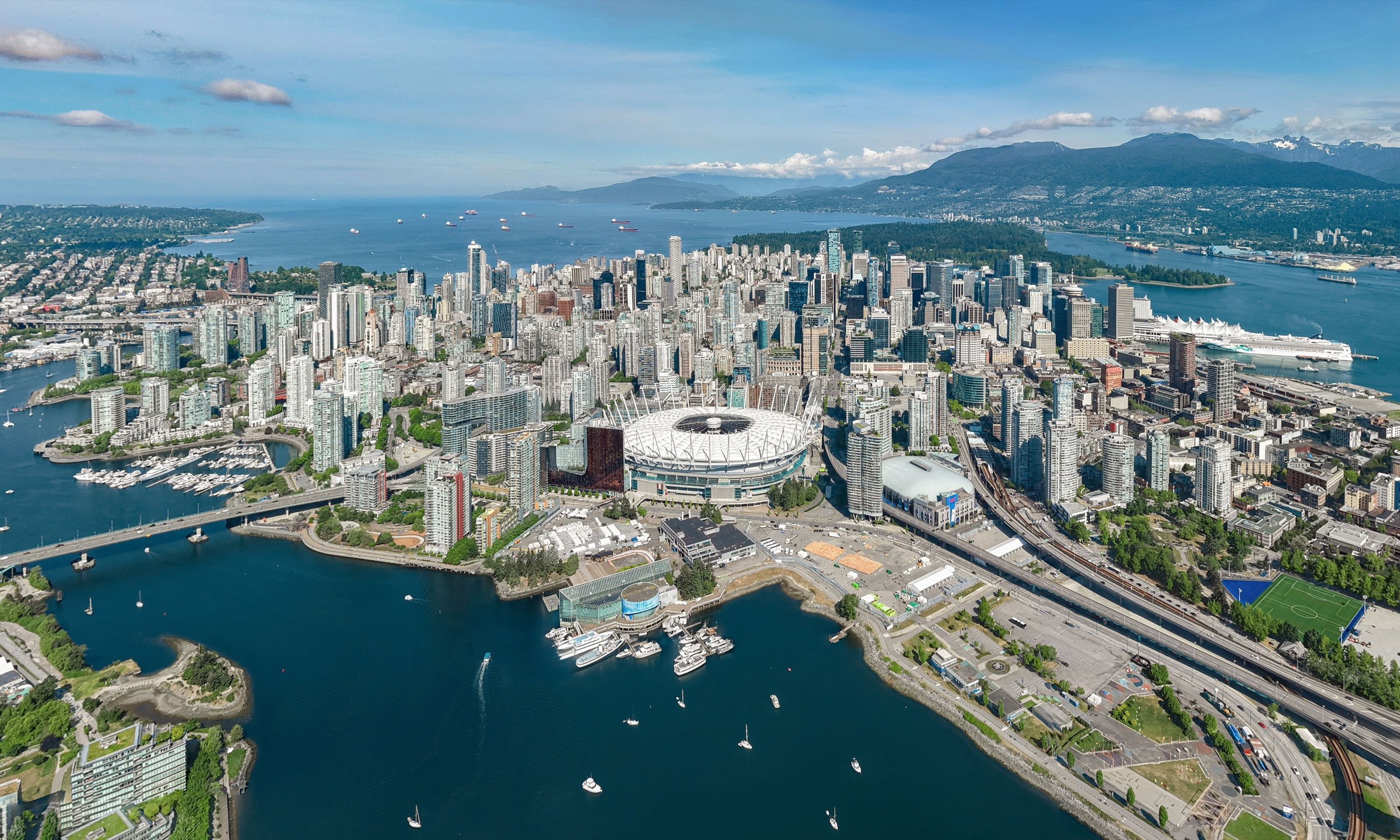
Vancouver-proper remains the most supply-constrained and highest-rent industrial submarket in Metro Vancouver. For owners, occupiers, and investors, understanding what drives this premium positioning is essential for making sound decisions in a market where options are limited and competition for quality space is persistent.
This analysis examines current conditions in the Vancouver-proper industrial market, the structural factors behind its premium status, and practical considerations for those looking to acquire, lease, or hold industrial assets within city limits.
Current Market Conditions in Vancouver-Proper
As of mid-2026, the consensus report across major brokerage firms shows Vancouver-proper with a vacancy rate of 5.4% and an availability rate of 7.1%. While these figures are above the Metro Vancouver averages of 4.3% vacancy and 5.8% availability, they reflect the unique composition of Vancouver's industrial inventory rather than any softening of demand.
Net asking rents in Vancouver-proper average $20.10 PSF, the highest among the major suburban submarkets and above the regional average of $19.10 PSF. This premium reflects the submarket's proximity to the downtown core, access to the port, and the functional obsolescence of much of its aging building stock.
The vacancy and availability gap in Vancouver, where availability exceeds vacancy by 1.7 percentage points, signals that some owners are marketing space for future occupancy or sublease while current tenants remain in place. This dynamic is common in urban industrial markets where relocation options are limited and lease terms tend to be longer.
Why Vancouver Commands a Rent Premium
Several structural factors explain why Vancouver-proper consistently achieves higher rents than suburban alternatives:
- Last-mile positioning: Vancouver's industrial pockets offer direct access to the region's densest population base. For distribution operators serving downtown and the urban core, this proximity reduces delivery times and transportation costs, justifying higher occupancy expenses.
- Port adjacency: The Burrard Inlet waterfront and proximity to port terminals make Vancouver attractive for logistics operators requiring frequent access to containerized freight. This advantage is difficult to replicate in suburban locations.
- Constrained supply: Unlike Surrey or Langley, Vancouver has no greenfield industrial land. New supply can only emerge through redevelopment or intensification of existing sites, both of which face regulatory complexity and high land costs.
- Zoning pressure: Residential and mixed-use rezoning pressures have steadily reduced Vancouver's industrial land base over decades. The remaining industrial zones are tightly held, and owners often have little incentive to sell given the scarcity value.
For occupiers, these factors mean that finding suitable space in Vancouver-proper requires patience, flexibility on building specifications, and often a willingness to pay a premium over suburban alternatives.
Building Stock and Functional Considerations
Vancouver's industrial inventory skews older than the regional average.
This older stock creates both challenges and opportunities:
- For tenants: Operations requiring high-bay racking, modern fire suppression, or significant power capacity may find Vancouver's options limited. However, users with lower ceiling requirements or those prioritizing location over building specifications can find functional space at rents that, while high for the region, remain below what newer suburban product might command.
- For owners: Older buildings with deferred maintenance or functional obsolescence may trade at discounts to replacement cost, but repositioning often requires significant capital. The economics of renovation versus redevelopment depend heavily on zoning entitlements and the specific use case being targeted.
- For investors: Vancouver industrial assets offer stable cash flows and long-term appreciation potential driven by land scarcity. However, underwriting must account for higher capital expenditure requirements and the possibility that some tenants will eventually relocate to suburban buildings with superior specifications.
Understanding the specific characteristics of each building, including clear height, column spacing, loading configuration, and power availability, is essential before committing to a lease or acquisition. Our guide to leasing industrial space covers these technical considerations in detail.
Tenant Strategy in a Constrained Submarket
Tenants seeking space in Vancouver-proper should approach the search differently than they would in submarkets with more available options.
First, lead times matter. With limited inventory and infrequent turnover, waiting until a lease expiration is imminent often results in poor outcomes. Beginning the search well in advance of a required occupancy date allows time to evaluate the limited options, negotiate effectively, and plan for fit-out if needed.
Second, consider hybrid approaches. Some occupiers maintain a smaller Vancouver presence for last-mile distribution or customer-facing functions while locating bulk storage and processing in lower-cost suburban facilities. This hub-and-spoke model can optimize total occupancy costs while preserving urban market access.
Third, evaluate sublease opportunities. Vancouver's availability rate exceeding its vacancy rate suggests sublease space is entering the market. Subleases can offer below-market rents and shorter commitments, though they also carry risks related to the underlying lease and the sublandlord's financial position.
Finally, be realistic about building specifications. The functional trade-offs of older Vancouver buildings may be acceptable depending on operational requirements. A thorough needs assessment, distinguishing between must-have and nice-to-have features, helps focus the search on viable options.
Owner and Investor Considerations
For owners of Vancouver industrial assets, the current environment offers both stability and strategic questions.
On stability: the structural supply constraints that drive Vancouver's premium positioning are unlikely to change. Industrial land in the city is not being created, and conversion pressure from other uses continues. Well-located, functional buildings with strong tenant covenants should continue to perform.
On strategic questions: owners should evaluate whether their assets are positioned for long-term industrial use or whether alternative highest-and-best-use scenarios warrant exploration. Redevelopment potential varies significantly by location and zoning, and understanding the range of options requires careful analysis of municipal policy and market demand.
For investors considering Vancouver industrial acquisitions, the average sale price across Metro Vancouver currently sits at $487 PSF, roughly a third below the 2022 peak. Underwriting should focus on sustainable rent levels, capital expenditure requirements, and the specific risk profile of each asset rather than regional averages.
Our guide to selling industrial property outlines the process for owners considering a disposition.
Comparing Vancouver to Suburban Alternatives
The decision between Vancouver-proper and suburban locations depends on operational priorities and cost sensitivity.
Richmond, with vacancy at 3.4% and net asking rents averaging $20.26 PSF, offers comparable rents to Vancouver with generally newer building stock and stronger logistics infrastructure.
Burnaby, at 4.9% vacancy and $19.67 PSF net asking rent, provides a middle ground with good highway access and a mix of older and newer inventory.
Surrey and Delta offer lower rents, at $18.66 PSF and $17.91 PSF respectively, with more options for larger footprints. However, the distance from Vancouver's urban core adds transportation costs and time for last-mile operations serving the city.
For a comprehensive view of how these submarkets compare, visit our submarket profiles.
Practical Takeaways
Vancouver-proper's industrial market in 2026 reflects the enduring tension between strong demand for urban industrial space and structural supply constraints that limit options. For tenants, early planning and flexibility on building specifications are essential. For owners, the scarcity value of well-located assets provides stability, though capital planning and strategic positioning require ongoing attention. For investors, Vancouver industrial offers long-term appreciation potential grounded in irreplaceable land value, balanced against the realities of older building stock and higher capital requirements.
For current opportunities or to discuss your requirements, contact our team.
Sources
- CBRE: Vancouver Industrial Figures, Q2 2026
- Colliers: Vancouver Industrial Market Report, Q2 2026
- Cushman & Wakefield: Vancouver Industrial MarketBeat, Q2 2026
- Avison Young: Metro Vancouver Industrial Market Report, Q2 2026
- JLL: Greater Vancouver Area Industrial Market Dynamics, Q2 2026
- Lee & Associates: Vancouver, BC Industrial Market Overview, Q2 2026