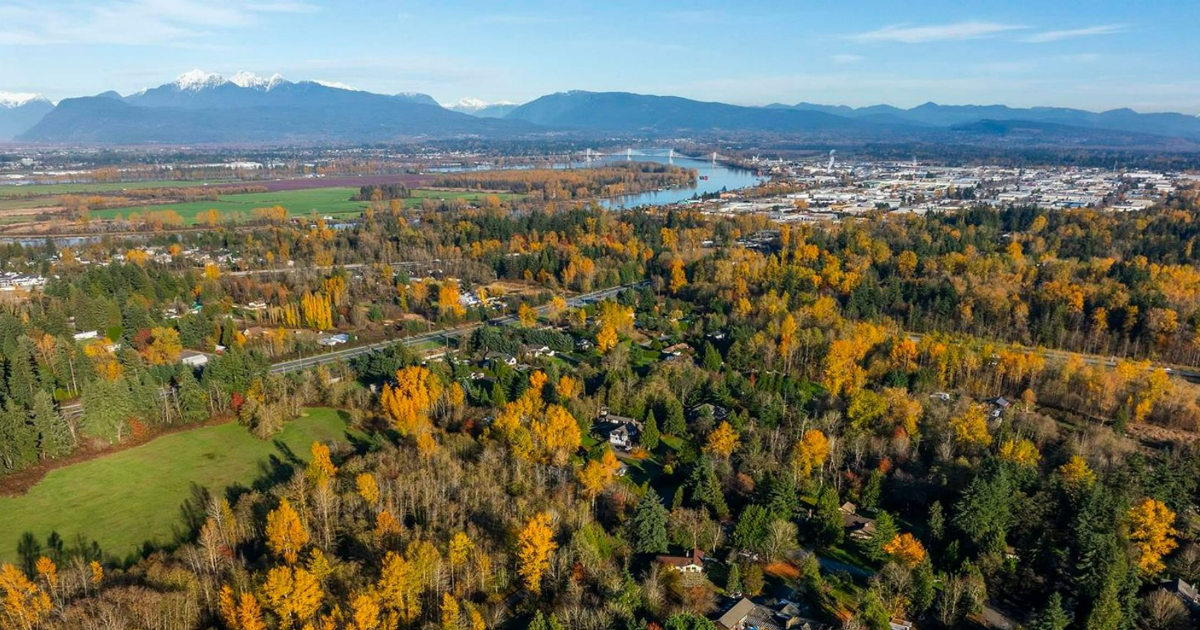
Port Kells has emerged as one of Metro Vancouver's most active industrial development corridors over the past three years. With Campbell Heights largely built out and the Agricultural Land Reserve constraining expansion elsewhere in Surrey, developers have turned their attention to the triangular pocket bounded by the Fraser Highway, 96 Avenue, and the Langley border. Across the Q2 2026 brokerage reports, roughly 3 million SF was under construction in all of Metro Vancouver, with Surrey carrying a large share of it, much of it in Campbell Heights and Port Kells, a supply injection that will shape leasing dynamics across Surrey and the broader Fraser Valley industrial market.
What Is Actually Being Built
Named project lists for Port Kells change quickly and are easy to get wrong, so this section sticks to what can be checked against public marketing material. The clearest new development currently being marketed is Telegraph at 19530 Telegraph Trail: an eight-unit industrial project of roughly 175,000 SF, marketed by Cushman & Wakefield for Conwest and Boffo, with units from about 18,000 SF up to the full building, 32-foot clear heights, dock and grade loading, and a stated 2028 completion.
Beyond that, the pipeline has to be verified project by project against City of Surrey development applications and the brokerages’ own material, because speculative square-footage totals for the submarket are not published consistently. I track Port Kells availability and new supply as part of my Surrey coverage. If you need the current list for a specific size range, ask and I will send what is actually being marketed today rather than a rounded pipeline number.
Infrastructure and Access Considerations
The appeal of Port Kells for developers stems from its relative proximity to Highway 1 via 176 Street and 200 Street, combined with land costs that remain below Campbell Heights and significantly below inner-ring submarkets like Burnaby or Richmond. However, infrastructure constraints have historically limited the pace of development.
Truck access remains a concern for larger distribution users. The intersection of 96 Avenue and 176 Street experiences congestion during peak hours, and the two-lane configuration of 192 Street north of Fraser Highway limits throughput for facilities relying on high trailer counts. Any road improvements in the corridor are a City of Surrey capital planning matter; check the current capital plan rather than relying on a quoted timeline.
Servicing capacity, particularly sanitary sewer and stormwater infrastructure, has also shaped project timelines. Several developments in the southern portion of Port Kells have required significant off-site upgrades, adding to construction costs and extending permitting windows. Prospective tenants and owner-users should factor infrastructure timelines into lease commencement assumptions.
Lease Rate Trajectory
Port Kells asking rents have risen steadily since 2023, tracking the broader Metro Vancouver trend but remaining at a discount to more established submarkets. Across the Q2 2026 brokerage reports, Surrey net asking rents averaged about $18.66 per square foot, with new-construction warehouse space in Port Kells at or above that depending on building quality, clear height, and dock configuration. Campbell Heights product in the same reports leased around and above the Surrey average, while Richmond averaged about $20.26 per square foot.
The influx of new supply will test absorption capacity. If tenant demand softens or construction timelines compress, landlords may face pressure to offer inducements, free rent, tenant improvement allowances, or fixturing periods, that have been largely absent from the Metro Vancouver market since 2021. Conversely, if absorption remains robust, the current discount to Campbell Heights may narrow further, narrowing the gap to Campbell Heights over the next couple of years.
For tenants evaluating relocation or expansion, Port Kells offers a window of opportunity. New-construction options with modern clear heights, efficient floor plates, and flexible demising are available for the first time in several years, a contrast to the tight sublease and second-generation market that has defined most of Metro Vancouver.
Implications for Owners and Investors
Investors considering Port Kells assets should weigh the submarket's growth trajectory against the near-term supply risk. Cap rates for stabilized industrial product in Port Kells sit above the inner-ring submarkets, reflecting investor confidence in long-term rent growth but also pricing in the infrastructure and access considerations noted above.
Strata product presents a different calculus. Owner-user demand for small-bay industrial units remains strong, driven by trades contractors, specialty manufacturers, and service businesses priced out of Vancouver and Burnaby. Industrial strata in Port Kells generally prices below comparable new-construction strata in Richmond or Delta, which supports owner-user economics for firms that want to own. However, resale liquidity in emerging submarkets can be thinner, and buyers should assess their hold period assumptions accordingly.
For developers, Port Kells remains attractive but increasingly competitive. Land values have risen with the rest of the Fraser Valley industrial market, and serviced sites now trade at a fraction of the discount to Campbell Heights they once did, compressing margins for shovel-ready industrial sites relative to earlier entrants. The economics still work for well-capitalized developers with strong tenant relationships, but the days of acquiring Port Kells land at a deep discount to Campbell Heights are largely over.
Key Takeaways
Port Kells is no longer an emerging submarket, it is an active one, with a development pipeline that will meaningfully expand Metro Vancouver's industrial inventory over the next two years. Tenants seeking modern distribution or flex space will find options here that are scarce elsewhere in the region. Investors should monitor absorption closely as new supply delivers, and owners of existing Port Kells buildings should consider how new competition may affect renewal negotiations.
NAI Commercial Vancouver tracks the Port Kells pipeline on an ongoing basis, providing clients with current availability data, lease comparables, and development timeline updates. For owners, occupiers, and investors evaluating opportunities in this submarket, informed timing decisions will be critical as the supply picture evolves through 2027.