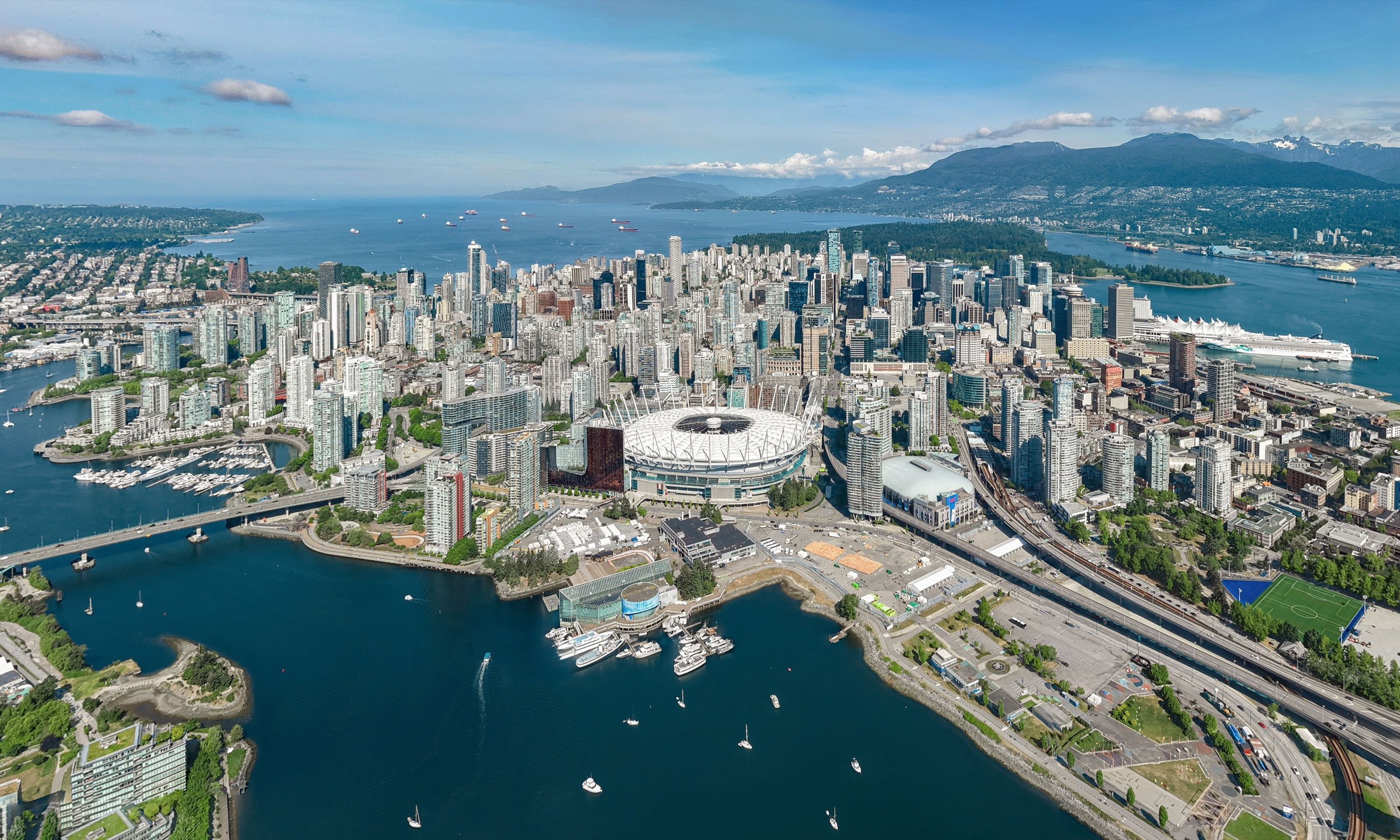
Vancouver-proper occupies a unique position in the Metro Vancouver industrial landscape. The city's industrial base is geographically constrained, hemmed in by residential neighbourhoods, commercial districts, and water on three sides. No new industrial land is being created, and the existing inventory faces steady pressure from rezoning proposals and alternative uses. For owners, occupiers, and investors, understanding the mechanics of this submarket is essential to making sound decisions.
Current Market Position
According to the consensus of Q2 2026 brokerage reports, Vancouver-proper industrial vacancy sits at 5.4 percent, with availability reaching 7.1 percent. The gap between these two figures reflects a market where sublease space and owner-listed premises add materially to what tenants can access, even though technically leased space remains on the books.
Net asking rents in Vancouver-proper average $20.10 PSF, the second-highest among Metro Vancouver submarkets after the North Shore. When you add additional rent, which typically runs $6 to $7 PSF across the region, total occupancy costs for tenants approach the upper $20s per square foot. This premium reflects the value of proximity to the urban core, port terminals, and a dense consumer base.
Why Availability Outpaces Vacancy
The spread between availability and vacancy in Vancouver-proper is wider than in most suburban submarkets. Several factors drive this pattern.
- Sublease activity. Some tenants who signed leases at peak rents in 2022 or 2023 now find themselves with excess space. Rather than absorbing the cost, they list portions of their premises for sublease while remaining the tenant of record. This space shows up in availability figures but not in vacancy statistics.
- Owner-occupied listings. Owner-users who are marketing their buildings for sale or lease-back arrangements contribute to availability without technically vacating.
- Development pipeline positioning. A handful of owners with older buildings are testing the market while exploring redevelopment or intensification options. These properties may be listed as available but are not actively vacant.
For tenants, the practical takeaway is that the range of options in Vancouver-proper is broader than the vacancy rate suggests. For landlords, the elevated availability means that tenant selection and retention strategies require more attention than raw scarcity might imply.
Geographic Pockets Within Vancouver-Proper
Vancouver-proper industrial is not monolithic. The submarket comprises several distinct pockets, each with its own characteristics.
Strathcona and Clark Drive. This area contains some of the city's oldest industrial stock. Building clear heights are often modest, and many parcels are irregular. Proximity to downtown and East Vancouver's creative economy makes the area attractive to light industrial users, food and beverage producers, and film and production support tenants. Land values here reflect speculative interest in future rezoning as much as current industrial utility.
False Creek Flats. The Flats sit between Main Street and Clark Drive, south of the rail corridor. Municipal policy has sought to preserve industrial and employment uses while allowing limited intensification. Tenants in this area benefit from central access but face older building stock and limited truck court depth in some locations.
Southeast Marine Drive and Kent Avenue. This corridor offers larger floorplates and better truck circulation than the inner neighbourhoods. Proximity to the Fraser River and port-related drayage routes makes it suitable for distribution and logistics users. Some of the more modern multi-tenant buildings in Vancouver-proper are found here.
Grandview and East 1st Avenue. A smaller pocket with a mix of light industrial and flex uses. Clear heights and loading configurations vary widely. This area appeals to smaller occupiers who prioritize urban access over heavy industrial functionality.
When evaluating Vancouver-proper options, tenants should map their operational needs, including truck turning radius, power requirements, and proximity to highways, against the specific characteristics of each pocket. For guidance on how to assess a submarket, see our submarket profiles.
Supply Constraints and Future Inventory
Across Metro Vancouver, construction activity has slowed sharply. The region has approximately 3.0 million square feet under construction, well below the 2023 peak of about 11.4 million square feet. Vancouver-proper contributes a small share of this pipeline because developable industrial land within city limits is essentially exhausted.
Municipal policy in Vancouver has increasingly favoured industrial intensification, stacked industrial formats, and mixed employment buildings. These approaches can add floor area but rarely replicate the operational efficiency of traditional single-storey distribution buildings. Ceiling heights in multi-storey formats may be lower, and truck access is more complex.
For occupiers who need large contiguous footprints, dock-high loading, and unobstructed truck courts, Vancouver-proper's future supply pipeline offers limited solutions. These users will likely need to consider suburban submarkets such as Surrey, Delta, or Langley for expansion.
Lease and Purchase Economics
At $20.10 PSF net rent, Vancouver-proper commands a premium of roughly $1 to $3 PSF over most suburban submarkets. For a hypothetical 20,000 SF unit, that translates to an additional $20,000 to $60,000 annually in base rent before additional rent is considered.
Whether this premium is justified depends on the occupier's business model. Users who serve urban customers, require proximity to the port for short-haul drayage, or benefit from a central workforce catchment may find the premium worthwhile. Users whose operations are less location-sensitive may achieve better value in Richmond, Delta, or Surrey, where net asking rents average $17.91 to $20.26 PSF depending on the submarket.
On the investment side, average sale prices across Metro Vancouver sit at approximately $487 PSF, roughly a third below the 2022 peak. Vancouver-proper assets often trade above this average, reflecting land scarcity and redevelopment optionality. Investors should underwrite carefully, distinguishing between income derived from current industrial use and speculative value tied to future rezoning.
For more on the differences between lease structures, see our net lease versus gross lease guide. For those weighing ownership against tenancy, our lease versus buy analysis offers a framework.
Practical Considerations for 2026
Several factors should inform decision-making in Vancouver-proper this year.
- Sublease opportunities. The elevated availability rate means sublease space is worth exploring. Sublease terms can offer flexibility, though tenants should conduct thorough due diligence on the head lease and the sublandlord's financial standing.
- Renewal timing. Tenants approaching lease expiry should begin discussions early. While rents have softened modestly from 2023 peaks, vacancy in Vancouver-proper remains tight enough that landlords retain leverage.
- Building condition. Older stock dominates Vancouver-proper. Prospective tenants should budget for potential fit-out costs and assess HVAC, electrical, and structural conditions before committing.
- Access and circulation. Some Vancouver-proper sites have constrained truck courts or street-level loading only. Users with frequent trailer deliveries should verify that the site can accommodate their equipment.
For tenants beginning a search, our guide to leasing industrial space outlines the process from requirements definition through lease execution.
Key Takeaways
Vancouver-proper industrial remains a premium submarket defined by scarcity, urban access, and elevated rents. The gap between availability and vacancy reflects sublease activity and owner-occupied listings that expand tenant options beyond what vacancy alone suggests. Supply constraints are structural, and new inventory will be limited and often non-traditional in format. Occupiers should weigh the access advantages against the cost premium and building limitations. Investors should distinguish between current-use income and speculative rezoning value. With careful analysis, both groups can find opportunities in this constrained but strategically important submarket.
Sources
- CBRE: Vancouver Industrial Figures, Q2 2026 (published 2026-07-28)
- Colliers: Vancouver Industrial Market Report, Q2 2026 (published 2026-07-10)
- Cushman & Wakefield: Vancouver Industrial MarketBeat, Q2 2026 (published 2026-07-02)
- Avison Young: Metro Vancouver Industrial Market Report, Q2 2026 (published 2026-07-15)
- JLL: Greater Vancouver Area Industrial Market Dynamics, Q2 2026 (published 2026-07-16)
- Lee & Associates: Vancouver, BC Industrial Market Overview, Q2 2026 (published 2026-07-15)
- Altus Group: Vancouver Commercial Real Estate Market Update, Q2 2026 (published 2026-09-09)