Updated October 2026 with Q2 2026 figures.
Flex industrial properties occupy a distinct position in Greater Vancouver's commercial real estate landscape. Neither purely warehouse nor conventional office, these hybrid assets combine functional elements of both-typically featuring higher office-to-warehouse ratios, upgraded building specifications, and configurations that accommodate diverse operational requirements. For owners, occupiers, and investors navigating Metro Vancouver's competitive industrial market, understanding flex space fundamentals is increasingly relevant.
Defining Flex Industrial in the Vancouver Context
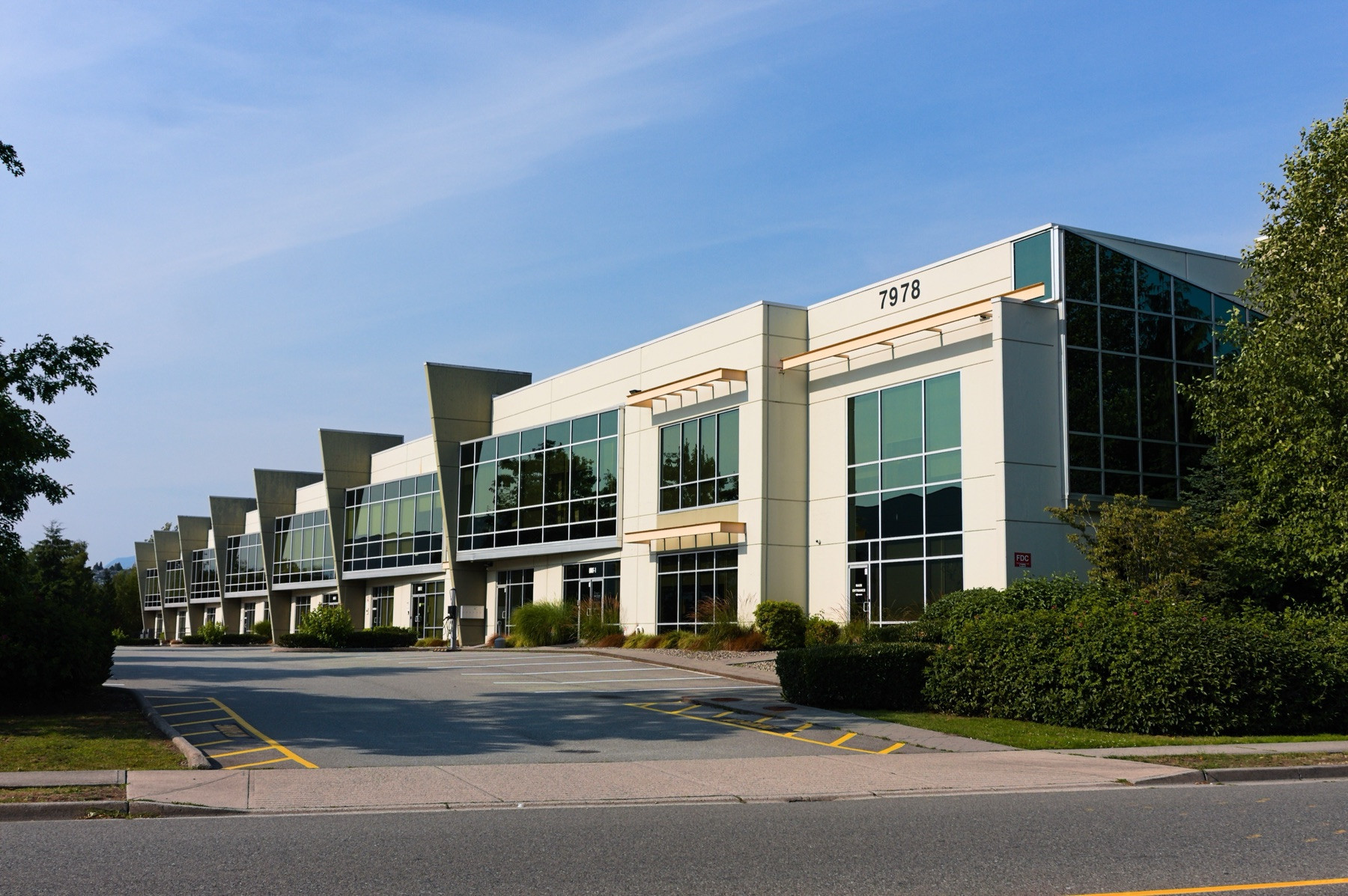
Flex industrial space generally refers to properties with 20% to 50% office or showroom finish, compared to standard warehouse buildings that typically maintain 5% to 15% office ratios. Key characteristics include:
- Clear heights ranging from 18 to 24 feet (lower than distribution warehouses but adequate for light manufacturing and storage)
- Higher power capacity, often 400 to 800 amps or more
- Multiple grade-level doors or dock positions allowing divisibility
- Upgraded HVAC systems serving finished areas
- Enhanced frontage and building aesthetics suitable for client-facing operations
In Greater Vancouver, flex buildings commonly house technology companies, specialty contractors, building envelope firms, food production with administrative components, wholesale showrooms, and businesses requiring training or demonstration facilities alongside warehousing.
Where Flex Space Concentrates Across Metro Vancouver
Flex industrial inventory distributes unevenly across the region's submarkets, with concentrations reflecting historical development patterns and zoning allowances.
Burnaby contains significant flex inventory, particularly in the Big Bend and Marine Way areas. Older flex buildings from the 1980s and 1990s trade at a modest premium to the Burnaby industrial average of about $19.67 per square foot net recorded in Q2 2026, while newer or recently renovated product commands a wider premium. The submarket benefits from central geographic positioning and strong transit access.
Richmond offers flex options along the Bridgeport and Crestwood corridors. Proximity to Vancouver International Airport makes Richmond flex space attractive for companies requiring both distribution capability and professional office environments for international clients. Lease rates for quality flex product typically sit above the Richmond industrial average of about $20.26 per square foot net in Q2 2026, which is already among the higher core-submarket averages.
Vancouver proper maintains limited flex inventory, concentrated in Mount Pleasant, the False Creek Flats, and Strathcona. These locations achieve premium rates over the Vancouver industrial average of about $20.10 per square foot net in Q2 2026, driven by urban convenience, creative industry demand, and constrained supply. The City of Vancouver's industrial land policies have preserved some flex-appropriate zoning, though competition for well-configured units persists even with city-wide vacancy near 5.4%.
Surrey and Langley have seen flex development expand along the Highway 1 corridor, particularly in Newton, Cloverdale, and emerging nodes like Campbell Heights. Newer flex buildings in these submarkets price off industrial averages of about $18.66 in Surrey and $19.20 in Langley in Q2 2026, offering relative value compared to inner-suburban alternatives.
Port Coquitlam and the Tri-Cities corridor provide flex options with strong highway access via the Lougheed and Trans-Canada corridors. This submarket appeals to regional service businesses requiring coverage across the Lower Mainland.
Lease Economics and Tenant Considerations
Flex industrial tenancies involve several economic factors that differ from standard warehouse leases. Occupiers should evaluate:
Base rent premiums: Flex space commands 15% to 40% higher base rents than equivalent-sized standard warehouse units in the same submarket, reflecting the cost of office improvements and building upgrades. However, tenants often find this premium offset by avoiding separate office leases or expensive tenant improvement programs.
Operating costs: Additional operating expenses for flex buildings typically range from $6 to $10 per square foot annually, accounting for higher common area maintenance, HVAC servicing, and property taxes associated with improved finishes. Tenants should request detailed operating cost budgets during lease negotiations.
Improvement allocation: Landlords of flex properties frequently provide tenant improvement allowances ranging from $10 to $30 per square foot for longer-term commitments, recognizing that incoming tenants may require reconfiguration of office-warehouse ratios to suit specific operations.
Term flexibility: Flex buildings often accommodate shorter initial lease terms-three to five years rather than the five to ten years common in large distribution facilities-making them suitable for growing businesses with evolving space requirements.
Investment Characteristics of Flex Assets
For investors and owners, flex industrial properties present a nuanced risk-return profile within the Greater Vancouver market.
Capitalization rates for well-located flex assets sit modestly above the roughly 4.4% regional average that Lee & Associates reported for Q2 2026, positioning them between premium distribution warehouses and older light industrial product. This spread reflects several factors:
- Higher tenant turnover potential compared to logistics buildings with major credit tenants
- Increased capital expenditure requirements to maintain office finishes between tenancies
- Smaller average tenant sizes, requiring more intensive property management
- Stronger rental growth potential in supply-constrained submarkets
Institutional investors have traditionally favoured large-format distribution assets, leaving flex properties more accessible to private investors and smaller funds. NAI Commercial Vancouver works with both buyer profiles, leveraging the NAI Global network to connect owners of flex assets with capital sources across North America seeking this product type.
Value-add opportunities exist in older flex buildings where office components require modernization. Properties built in the 1980s and 1990s often feature dated finishes that, once upgraded, can achieve rental rate increases of 20% to 30% while improving tenant retention.
Regulatory and Zoning Considerations
Flex industrial development and use face specific regulatory considerations across Metro Vancouver municipalities.
Many jurisdictions have implemented office content limits within industrial zones to preserve land for core industrial functions. Vancouver's I-2 zoning, for example, caps general office floor area at the greater of 325 square metres or one-third of total floor area according to City of Vancouver staff reports, so confirm the current limit with the City before planning an office-heavy layout. Surrey's industrial zones similarly cap office components, though allowances vary by specific designation.
Owners considering conversions from standard warehouse to flex configurations should verify zoning compliance before undertaking improvements. Unauthorized office buildouts can trigger enforcement actions and complicate future sale or lease transactions.
The regional policy environment-shaped by Metro Vancouver's industrial land protection initiatives-suggests flex development will remain concentrated in existing nodes rather than expanding onto greenfield sites designated for heavier industrial uses.
Market Outlook and Practical Takeaways
Greater Vancouver's flex industrial segment has loosened along with the broader industrial market, where vacancy averaged 4.3% in Q2 2026 and more than 10 million square feet of small-bay space under 40,000 SF is available, though demand patterns differ. Technology sector growth, the expansion of specialty manufacturing, and the ongoing need for hybrid operational facilities continue driving absorption.
New flex construction remains limited relative to large-format logistics development, as developers have prioritized high-cube distribution centres to meet e-commerce and port-related demand. This supply imbalance supports rental rate stability for existing flex inventory.
For occupiers, the practical takeaway is straightforward: businesses requiring meaningful office components alongside warehouse or production space should find more choice than two years ago, though well-configured flex units in preferred submarkets still draw competition. Early engagement with the market-ideally 12 to 18 months before lease expiration or anticipated space needs-provides adequate time to evaluate options and negotiate favourable terms.
For investors and owners, flex assets offer portfolio diversification and exposure to tenant sectors less represented in large-format industrial holdings. Careful attention to building specifications, submarket dynamics, and tenant credit quality remains essential to achieving stable returns from this asset class.