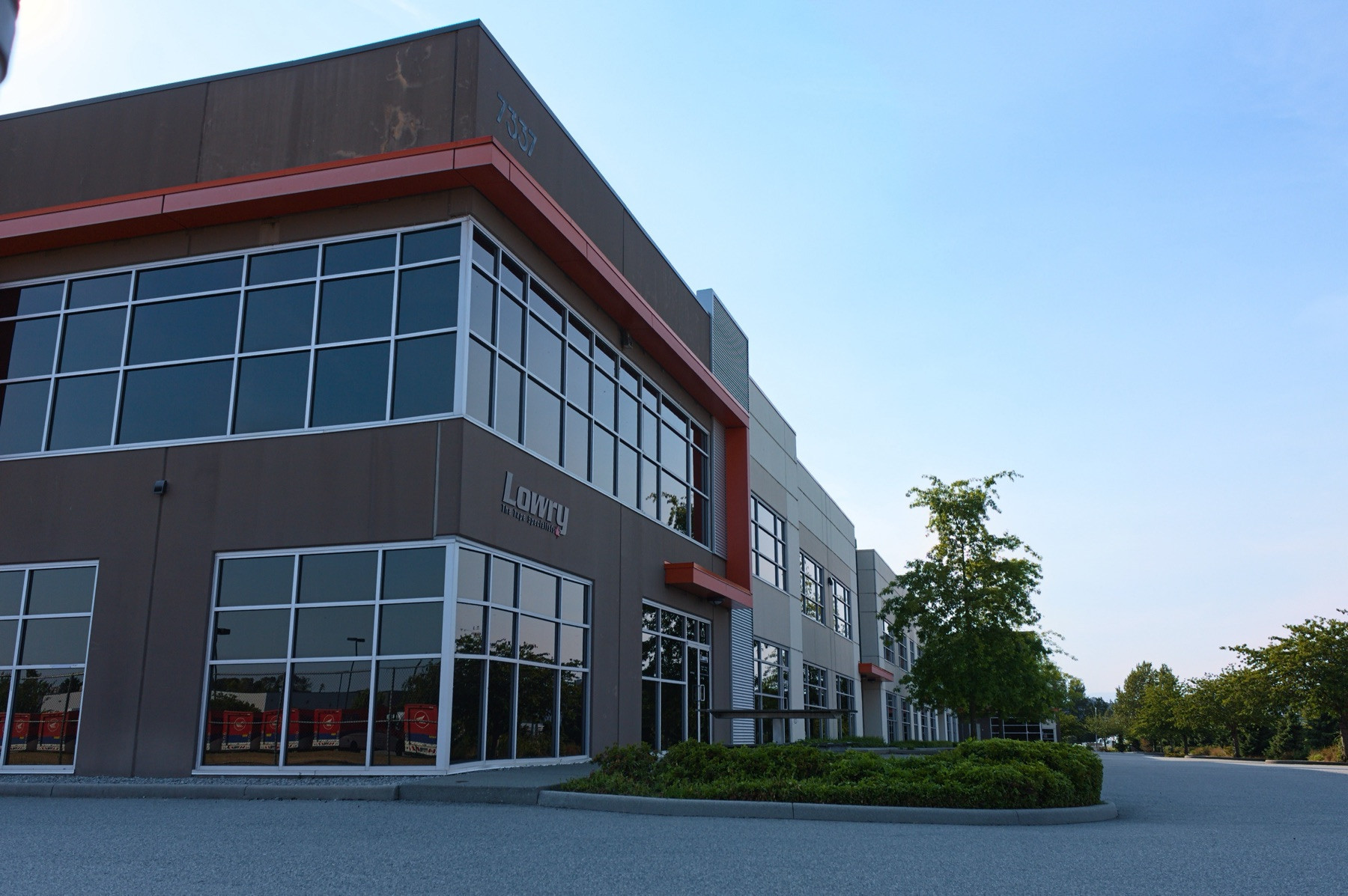
Flex industrial real estate occupies a distinct position in Greater Vancouver's commercial property landscape. Combining warehouse functionality with finished office or showroom components, these hybrid buildings serve businesses that need more than a conventional distribution facility but less than a standalone office property. For owners, occupiers, and investors navigating Metro Vancouver's industrial market, understanding how flex space differs from standard industrial product-and where it fits in a portfolio or operational strategy-is increasingly relevant.
Defining Flex Industrial in the Vancouver Context
Flex industrial buildings typically feature a combination of warehouse or light manufacturing space with a meaningful office or retail-ready component. The office portion commonly ranges from 20% to 50% of the total gross leasable area, though configurations vary considerably depending on the original building design and subsequent tenant improvements.
In Greater Vancouver, flex properties are most commonly found in older industrial parks where zoning permits a broader range of uses, as well as in purpose-built business parks developed from the 1980s through the early 2000s. These buildings generally offer:
- Clear heights between 16 and 22 feet (lower than modern distribution warehouses)
- Grade-level or dock-high loading, often with fewer doors per square foot than logistics facilities
- Finished office space with HVAC, washrooms, and sometimes customer-facing entrances
- Parking ratios higher than standard industrial but lower than office buildings
- Smaller bay sizes, typically 3,000 to 15,000 square feet
This configuration suits businesses that require a physical workspace for production, assembly, or warehousing while also maintaining administrative functions, technical operations, or customer interaction on-site.
Who Occupies Flex Space in Metro Vancouver
The tenant profile for flex industrial differs meaningfully from that of bulk distribution or heavy manufacturing facilities. Common occupiers in Greater Vancouver's flex market include:
Technology and electronics firms requiring assembly, testing, and R&D space alongside engineering offices. Richmond and Burnaby have historically attracted these users due to proximity to skilled labour pools and transportation links.
Building trades and contractors who need material storage and workshop space combined with estimating, project management, and customer meeting areas. Surrey, Port Coquitlam, and Langley submarkets see strong demand from mechanical, electrical, and specialty contracting firms.
Medical and laboratory users seeking specialized environments that blend cleanroom or lab space with administrative offices. These tenants often require upgraded electrical, ventilation, and plumbing infrastructure.
Wholesale and showroom operators in industries such as flooring, cabinetry, fixtures, and building products who benefit from customer-accessible locations with display areas attached to warehouse inventory.
Service and repair businesses including equipment dealers, vehicle upfitters, and technical service providers needing shop space with front-office capabilities.
The common thread among these users is operational complexity that cannot be served by either a pure office environment or a stripped-down warehouse shell. Flex buildings allow them to consolidate functions under one roof, reducing operational friction and real estate costs compared to maintaining separate facilities.
Submarket Availability and Lease Rate Considerations
Flex industrial inventory is not uniformly distributed across Greater Vancouver. Concentration tends to be highest in established industrial parks where older building stock and permissive zoning create opportunities for hybrid uses.
Burnaby remains one of the region's primary flex markets, particularly in the Big Bend, Byrne Road, and Norland Avenue areas. Lease rates for flex space in Burnaby track the submarket's Q2 2026 net asking average of about $19.67 per square foot, with office finish levels and building condition moving individual deals above or below that. Burnaby vacancy has loosened to about 4.9%, though some older flex buildings have been repositioned or redeveloped, thinning the flex stock.
Richmond offers flex product throughout the Bridgeport, Crestwood, and East Richmond industrial areas. Net asking rents in Richmond averaged about $20.26 per square foot in Q2 2026, with properties closer to the Canada Line stations commanding premiums. Richmond's historical strength in technology and food processing has sustained demand for flex configurations.
Surrey and Langley have traditionally offered more affordable flex options, though the gap has narrowed: net asking rents averaged about $18.66 per square foot in Surrey and $19.20 in Langley in Q2 2026. Business parks in Newton, Port Kells, and Gloucester Industrial Estate contain significant flex inventory. These submarkets attract cost-sensitive users willing to trade central location for value.
Vancouver proper has limited flex industrial inventory, concentrated primarily in the Mount Pleasant and False Creek Flats areas. Intense land competition and rezoning pressures have reduced available stock, though net asking rents in Vancouver still averaged only about $20.10 per square foot in Q2 2026, with vacancy at 5.4%.
It is worth noting that flex buildings often trade at different cap rates than standard industrial product. The higher management intensity and tenant improvement requirements can narrow investor interest, though well-located flex assets with stable tenancies remain sought after.
Lease Structure and Tenant Improvement Realities
Flex industrial leases in Greater Vancouver typically follow the triple-net structure common to industrial property, with tenants responsible for property taxes, insurance, and common area maintenance in addition to base rent. Operating costs vary depending on building age and amenities but generally run about $6 to $7 per square foot annually across Metro Vancouver, with older or amenity-heavy buildings falling outside that band.
Tenant improvement allowances require careful negotiation. Because flex buildings often need significant customization-upgraded electrical for technical users, additional HVAC for office components, or specialized flooring for showroom areas-the division of improvement costs between landlord and tenant becomes a central lease negotiation point.
Landlords of flex properties should anticipate longer vacancy periods between tenancies and higher turnover costs compared to vanilla industrial buildings. The specialized nature of tenant improvements means incoming occupiers frequently require substantial modifications to suit their operations.
For tenants, understanding the existing building infrastructure before committing to a lease is essential. Items such as electrical service capacity, HVAC zoning, fire suppression ratings, and loading configurations can materially affect occupancy costs if upgrades are required.
Investment Considerations for Flex Industrial Assets
Investors evaluating flex industrial properties in Greater Vancouver should consider several factors distinct from standard industrial underwriting:
Tenant credit and lease term carry elevated importance given the specialized nature of flex occupancies. A single-tenant flex building with a short remaining lease term presents higher re-leasing risk than a comparable standard industrial asset.
Functional obsolescence is a recurring concern. Many flex buildings constructed in the 1980s and 1990s feature clear heights, column spacing, and mechanical systems that limit appeal to modern users. Investors should assess capital expenditure requirements carefully.
Zoning flexibility can be a double-edged consideration. Properties in zones permitting office, retail, or residential uses may offer redevelopment upside but also face competition from higher-value alternative uses that could accelerate land price appreciation beyond industrial economics.
Management intensity tends to be higher for multi-tenant flex buildings. Investors accustomed to the passive nature of single-tenant logistics facilities should factor in the operational demands of flex assets.
NAI Commercial Vancouver advises clients on flex industrial transactions across Metro Vancouver, drawing on market intelligence from the NAI Global network to provide context on how local flex fundamentals compare to other major North American markets.
Practical Takeaways
Flex industrial real estate serves an important function in Greater Vancouver's commercial property ecosystem, bridging the gap between conventional warehouse and office environments. For occupiers, these buildings offer operational consolidation and adaptability. For investors and owners, they present both opportunities and complexities that differ from standard industrial product.
Success in the flex market-whether as tenant, landlord, or investor-depends on realistic assessment of building functionality, careful lease structuring, and clear understanding of the specific submarket dynamics at play. As Greater Vancouver's industrial land supply remains constrained and user requirements continue to evolve, flex properties will likely maintain their relevance for businesses seeking hybrid solutions in a competitive real estate environment.