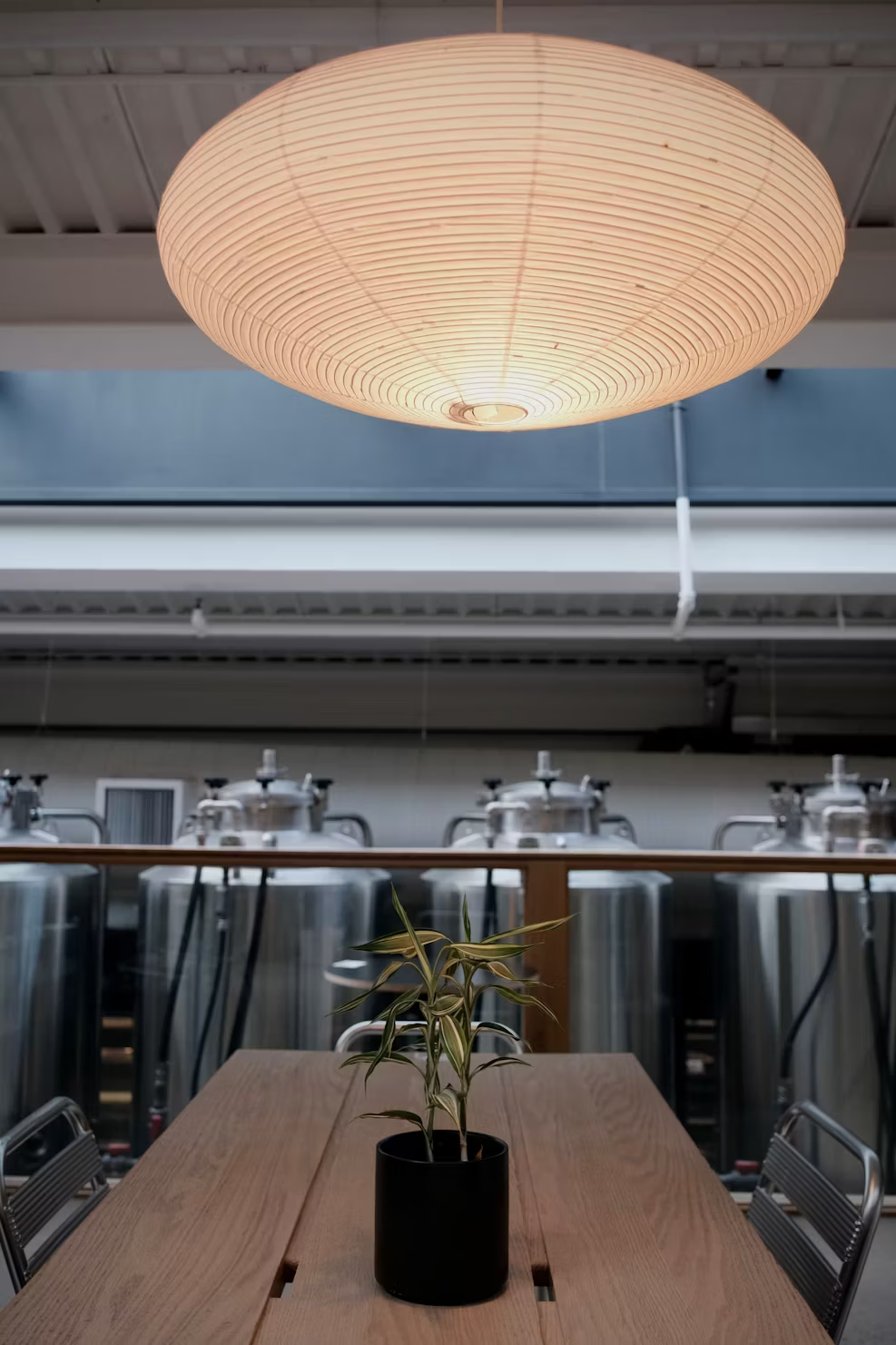
Industry Vertical
Food & Beverage.
Industrial space for food-grade production and cold-chain distribution.
Got a food & beverage question? Talk to Samuel directly. No gatekeepers, no forms required.
Overview
Food & Beverage real estate overview
Food and beverage operators require industrial real estate that meets specific compliance, infrastructure, and operational standards - CFIA inspection-ready design, food-grade finishes, drainage, ventilation, refrigeration capacity, and clear separation between production, packaging, and storage. The cluster concentrates in Burnaby (production), Richmond (cold-chain, distribution), Abbotsford (production, agricultural-industrial), and select Delta and Surrey submarkets.
Real Estate Requirements
What this industry needs.
- Food-grade finishes (epoxy floors, washable wall finishes)
- Drainage and ventilation for food handling areas
- Refrigeration capacity (cooler, freezer, blast as required)
- Power capacity for refrigeration and production equipment
- CFIA compliance design where federal inspection is required
- Separation between production, packaging, and storage areas
Considerations
What to weight in site selection.
Food and beverage operators face meaningful capex requirements for food-grade compliance and refrigeration infrastructure. Build-out timelines extend beyond standard industrial leases. Conversion of dry distribution to food-grade is expensive - purpose-built or already food-grade buildings deliver materially better economics. Lease structures should accommodate the longer commitments required to amortize tenant capex.
Why Me
Why work with me
Food and beverage space has its own checklist: CFIA compliance, food-grade finishes, drainage, refrigeration capacity, and the capital it takes to get a building there. I focus exclusively on industrial and track food-grade and cold-chain inventory across Richmond, Burnaby, Abbotsford, and Delta. I can help you compare an already food-grade building against a conversion or a build-to-suit, and structure a lease long enough to carry the capex.
Frequently Asked Questions
Food & Beverage, answered.
What's CFIA compliance for food production facilities?
The Canadian Food Inspection Agency regulates federally inspected food production facilities. Compliance requirements include facility design (separation between operations, drainage, sanitation), equipment standards, hygienic protocols, and ongoing inspection. Federally inspected operators can sell product across provincial and international borders. Provincially inspected facilities operate under provincial regulations with more limited distribution.
Where should I locate a food production facility in Metro Vancouver?
Submarket selection depends on the specific operation - production-focused operators often concentrate in Burnaby and Abbotsford; cold-chain operators in Richmond; combined production-distribution in Richmond and Burnaby. Labour catchment, supplier proximity, and customer distribution geography all factor into the decision.
How much does food-grade conversion cost?
Conversion costs vary widely based on starting condition and required specifications - typically $50 to $200+ per square foot for full food-grade conversion including flooring, finishes, drainage, refrigeration installation, and process infrastructure. Operators should model conversion economics against build-to-suit or already-food-grade alternatives.
What lease term works for a food production operator?
Lease terms typically run 10 to 15 years to amortize the meaningful tenant capital investment in food-grade build-out and refrigeration infrastructure. Operators making material capital commitments should negotiate longer terms with renewal options. Shorter terms typically don't justify the capital commitment unless the lease economics or operational urgency dictate otherwise.