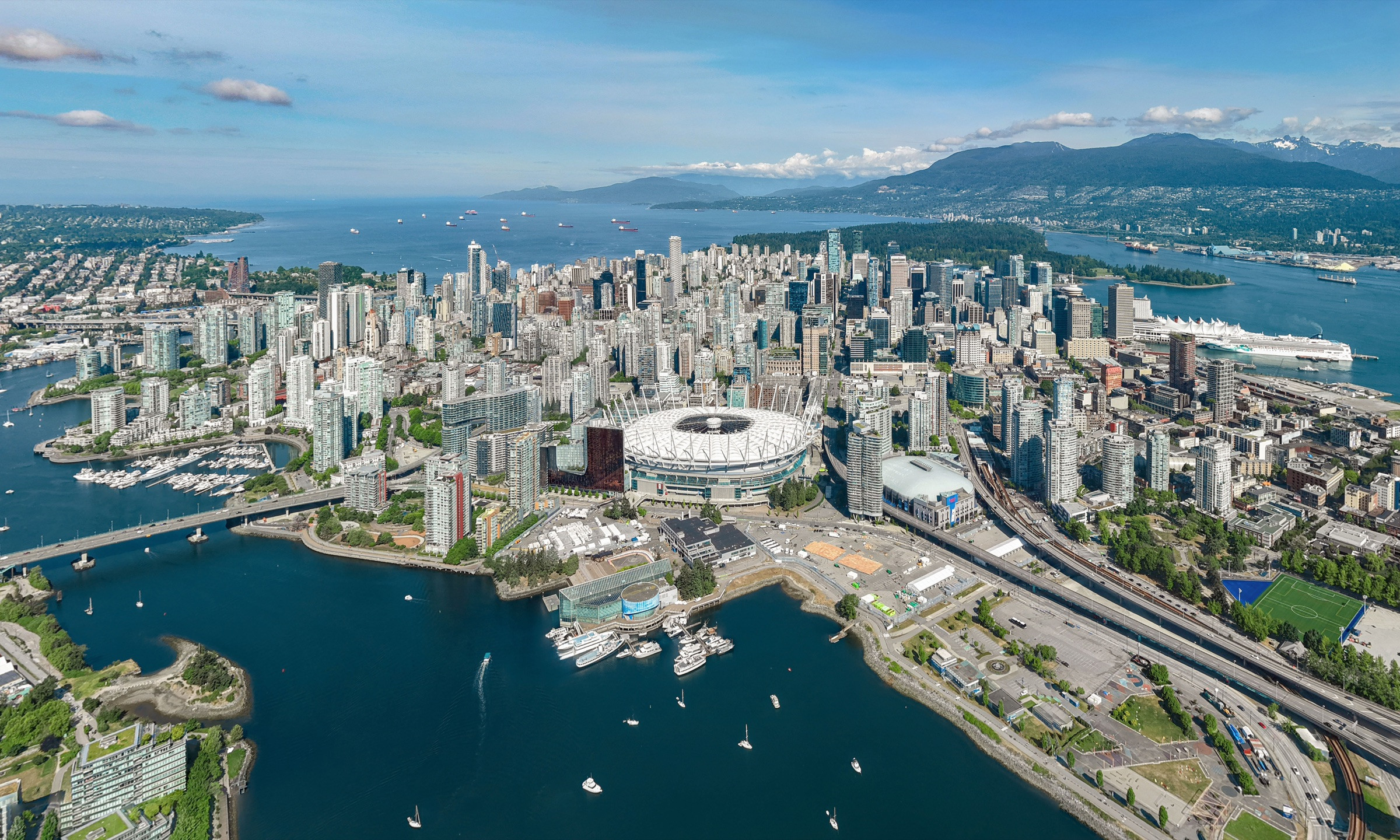
As Metro Vancouver's industrial land supply tightens against sustained demand, municipalities are increasingly turning to intensification policies as a pressure valve. These policies (encouraging or requiring higher-density industrial development) represent a fundamental shift in how industrial land is used, developed, and valued across the region. For owners, occupiers, and investors, understanding these evolving frameworks is essential to making informed decisions about acquisition, development, and long-term asset positioning.
The Policy Rationale Behind Intensification
Metro Vancouver's industrial land challenge is well-documented. The Agricultural Land Reserve constrains outward expansion, while residential and mixed-use pressures continue to erode industrial inventories in established areas. Between 2010 and 2024, the region lost approximately 1,200 acres of industrial land to rezoning and conversion, even as e-commerce growth and nearshoring trends drove unprecedented demand for distribution and manufacturing space.
Municipal intensification policies emerged as a response to this arithmetic. Rather than accepting a zero-sum trade-off between industrial capacity and competing uses, several municipalities began exploring vertical solutions: multi-storey industrial buildings, structured parking that preserves yard space, and revised zoning that permits greater floor area ratios (FAR) on industrial parcels.
The policy rationale is straightforward: if horizontal expansion is constrained, vertical development can extract more productive capacity from existing industrial land. In practice, implementation varies significantly across jurisdictions, creating a patchwork of opportunities and constraints that investors and occupiers must navigate carefully.
Vancouver's Approach: Employment Lands Review and I-4 Zoning
The City of Vancouver has been among the most aggressive in pursuing intensification. Following its Employment Lands and Economy Review completed in 2020, the city introduced several zoning amendments designed to facilitate higher-density industrial development while protecting core industrial areas from residential encroachment.
The I-4 zoning district, applicable in parts of the False Creek Flats and select Mount Pleasant industrial areas, permits FARs up to 5.0 for industrial uses, a dramatic departure from traditional single-storey warehouse development. Buildings under I-4 can incorporate multi-level logistics facilities, vertically stacked light manufacturing, and structured approaches to goods movement including freight elevators and ramped vehicle access.
These provisions have already influenced several development proposals in the Flats, though construction costs for multi-storey industrial remain 40-60% higher per square foot than conventional tilt-up buildings. Lease rates in Vancouver's industrial districts now range from $28 to $38 per square foot net, providing some economic justification for intensified development, though pro forma viability remains project-specific.
Vancouver has also implemented industrial land covenants on certain parcels, restricting future rezoning to non-industrial uses. This policy tool provides long-term certainty for industrial investors while removing speculative residential uplift from land pricing calculations.
Burnaby and Richmond: Measured Intensification
Burnaby's Big Bend industrial area and Richmond's established industrial districts have seen more measured approaches to intensification. Both municipalities have updated official community plans to encourage, but not mandate, higher-density industrial development.
In Burnaby, the city's Industrial Land Strategy permits increased site coverage and relaxed setback requirements for industrial parcels, effectively allowing greater building footprints without necessarily requiring vertical development. The Big Bend area, with its proximity to the Fraser River and established infrastructure, has seen several recent developments maximize ground coverage while maintaining single-storey configurations, a pragmatic response to the region's continued preference for grade-level logistics facilities.
Richmond's approach has focused on protecting industrial land from conversion while permitting accessory uses that improve economic viability. The city's updated industrial zones allow for increased office components (up to 30% of gross floor area in some districts) and limited retail ancillary to industrial operations. This flexibility has proven attractive to distribution operators requiring customer-facing showrooms or technical sales functions alongside warehouse operations.
Current Richmond industrial lease rates range from $20 to $28 per square foot net, with cold storage and food-grade facilities commanding premiums at the upper end of this range. Intensification policies have not yet meaningfully altered the submarket's building stock, but land values increasingly reflect the optionality these policies create.
Surrey and Langley: Balancing Growth and Infrastructure
The eastern submarkets present different intensification dynamics. Surrey's industrial areas (including Port Kells, Newton, and Cloverdale) face less immediate land pressure than Vancouver or Richmond, but municipal policy has nonetheless evolved to anticipate future constraints.
Surrey's Official Community Plan update adopted in 2024 introduced provisions for multi-storey industrial development in designated employment areas, with FARs up to 2.5 permitted in certain zones. However, infrastructure capacity, particularly transportation and utilities, remains a practical constraint. The 32 Avenue widening project and related improvements in Campbell Heights will eventually support more intensive development, but current servicing limitations temper near-term intensification potential.
Langley Township has taken a more cautious approach, maintaining traditional industrial zoning in most areas while conducting ongoing reviews of potential intensification opportunities. The municipality's extensive agricultural land boundaries create hard edges for industrial expansion, making efficient use of existing industrial parcels increasingly important. Current lease rates in Langley range from $16 to $22 per square foot net, with newer construction in the Gloucester Industrial area commanding the higher end.
Practical Implications for Market Participants
For industrial property owners, intensification policies create both opportunities and obligations. Parcels in jurisdictions with permissive FAR allowances may carry redevelopment premiums, even if current improvements are functional single-storey buildings. Owners should understand their property's zoning designation, permitted density, and any covenants or restrictions that affect future development potential.
Investors underwriting acquisitions must account for intensification optionality in their valuation models. A 2-acre site in Vancouver's False Creek Flats with I-4 zoning represents fundamentally different development potential than an equivalently sized parcel in a traditional I-2 zone. NAI Commercial Vancouver's investment underwriting approach incorporates these policy variables alongside conventional market metrics.
For occupiers, intensification policies influence both availability and building characteristics. Multi-storey industrial buildings, still rare in Metro Vancouver but increasingly viable under current policy frameworks, offer different operational profiles than conventional warehouses. Freight elevator capacity, floor loading limits, and ramped access configurations require careful evaluation against operational requirements.
Tenants in submarkets with active intensification should also anticipate potential redevelopment scenarios. Landlords holding underutilized sites may pursue intensification projects at lease expiry, affecting renewal negotiations and long-term occupancy planning.
The Investment Calculus Going Forward
Municipal intensification policies are reshaping Metro Vancouver's industrial investment landscape in ways that reward informed analysis. The NAI Global network provides comparative perspective on intensification approaches in other constrained markets. Hong Kong, Singapore, and select European cities have decades of experience with multi-storey logistics facilities, offering useful precedents as Metro Vancouver's policies mature.
The key takeaway for market participants is that intensification policies are not uniform across the region, and their practical implications depend heavily on specific site characteristics, infrastructure capacity, and operator requirements. Owners and investors should audit their existing holdings against current municipal policies, while occupiers should incorporate policy trajectories into site selection and lease negotiation strategies. As industrial land becomes increasingly scarce, the municipalities that successfully balance intensification with operational functionality will attract disproportionate investment and occupier interest in the years ahead.