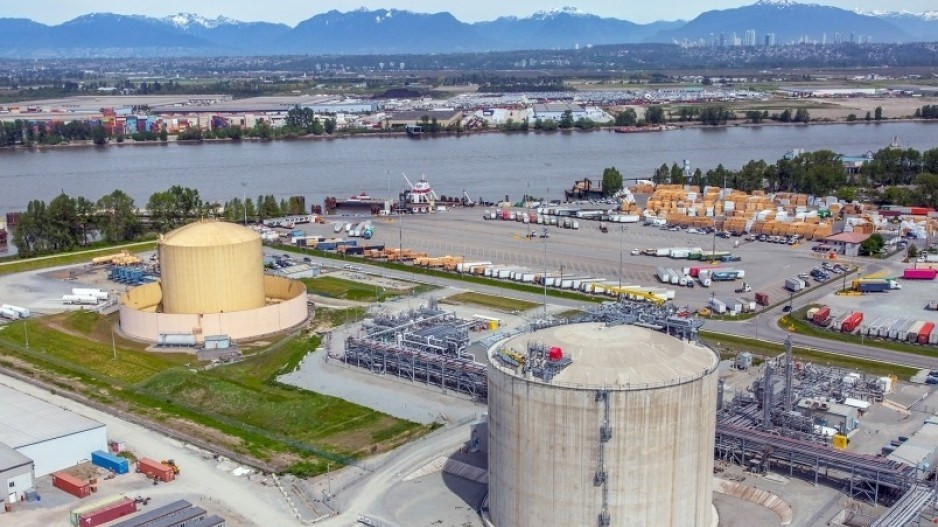
As Metro Vancouver's industrial vacancy remains compressed and lease rates in core submarkets continue to climb, the Langley and Aldergrove corridor has emerged as a compelling alternative for occupiers, developers, and investors seeking scale and value. This eastern reach of the region's industrial landscape offers what many closer-in markets cannot: larger contiguous land parcels, purpose-built facilities, and room for continued development.
Geographic Context and Strategic Positioning
The Langley-Aldergrove industrial corridor stretches along the Highway 1 and Fraser Highway corridors, extending from the Gloucester Industrial Estates and Langley Business Park in the west through to Aldergrove's emerging industrial nodes near the U.S. border crossing at 264th Street. This positioning provides direct access to Highway 1, Highway 13 (264th Street), and the Aldergrove-Lynden border crossing, making it particularly attractive for logistics operators serving cross-border trade routes.
Unlike the constrained submarkets of Vancouver, Burnaby, and Richmond, where industrial land is essentially built out, the Langley and Aldergrove area benefits from remaining developable agricultural land that has been, or is in the process of being, redesignated for industrial use. The Township of Langley has been proactive in identifying employment lands, with several hundred acres either recently developed or in various stages of planning approval.
For users requiring 50,000 square feet or more of contiguous space, this corridor increasingly represents the most practical option in the region. Comparable availabilities in Delta, Surrey, or Port Coquitlam are rare and often command premium pricing when they do come to market.
Current Lease Rates and Vacancy Dynamics
Industrial lease rates in Langley have historically traded at a discount to more central submarkets, though that gap has narrowed considerably over the past three years. As of early 2025, asking net lease rates for Class A industrial space in Langley range from approximately $18.00 to $23.00 per square foot annually, depending on building quality, clear height, and lot configuration. Older Class B product in secondary locations may still trade in the $14.00 to $17.00 per square foot range.
By comparison, prime industrial space in Burnaby and Richmond now commands rates in the $24.00 to $30.00 per square foot range, with select buildings exceeding $32.00 per square foot. Surrey's Campbell Heights and Port Kells submarkets, often viewed as Langley's direct competitors, generally fall between $19.00 and $25.00 per square foot for comparable product.
Vacancy in Langley has fluctuated more than in core markets, primarily due to the delivery of speculative developments. Several large-format buildings completed in 2023 and 2024 experienced initial lease-up periods of six to twelve months, contributing to temporary vacancy spikes. However, absorption has remained steady as users migrate eastward in search of functional, modern space that their expansion budgets can support.
Major Developments and New Supply
The development pipeline in Langley and Aldergrove reflects sustained confidence in the submarket's trajectory. Several institutional developers and private landowners have brought significant projects to market:
- Gloucester Industrial Estates continues to see phased development, with new buildings offering 32-foot to 36-foot clear heights and ample trailer parking, a configuration increasingly demanded by logistics and distribution users.
- Route 99 Industrial Park and adjacent developments along 200th Street have attracted food processing, cold storage, and third-party logistics tenants seeking proximity to both the border and the broader Metro Vancouver consumer base.
- Aldergrove's 264th Street corridor has seen accelerated activity, with new strata and lease developments catering to small and mid-bay users in the 5,000 to 25,000 square foot range.
Notably, several build-to-suit projects have been completed for users unable to find existing inventory meeting their specifications. This trend underscores both the demand for modern, high-clear industrial space and the limitations of aging stock in more established submarkets.
User Profile and Sector Demand
The tenant base in the Langley-Aldergrove corridor reflects the area's logistical advantages and available building formats. Key demand drivers include:
- Third-party logistics and distribution: Operators serving e-commerce fulfillment, retail distribution, and cross-border freight forwarding have been particularly active, drawn by highway access and the ability to secure larger footprints.
- Food and beverage processing: The availability of larger sites with appropriate zoning, combined with competitive utility costs relative to Vancouver, has attracted food manufacturers and cold storage operators.
- Construction and building materials: Lumber yards, equipment suppliers, and building product distributors benefit from lower land costs and the ability to accommodate outdoor storage.
- Agricultural and horticultural support: Proximity to the Agricultural Land Reserve and active farming operations supports demand from agricultural equipment dealers, feed suppliers, and related industries.
Small-bay strata product has also performed well in Aldergrove, appealing to contractor and trades users seeking ownership opportunities at price points below those available in Surrey or Coquitlam. Strata units in the 2,000 to 5,000 square foot range have traded in the $350 to $450 per square foot range, compared to $500 to $650 per square foot in more central locations.
Infrastructure and Municipal Considerations
Transportation infrastructure remains both an asset and a constraint for the Langley-Aldergrove corridor. Highway 1 provides the primary east-west connection to the Port of Vancouver and the broader regional network, though congestion through the Langley-Surrey stretch continues to challenge freight movement during peak periods. The planned improvements to Highway 1 and the eventual extension of SkyTrain to Langley City may improve labour accessibility, though the direct impact on industrial operations remains to be seen.
The Township of Langley has demonstrated a generally supportive posture toward industrial development, with streamlined permitting processes for projects aligned with the Official Community Plan. However, developers and occupiers should be aware of ongoing discussions regarding development cost charges, environmental setbacks, and agricultural land interface requirements, all of which can influence project feasibility and timelines.
Water and sewer capacity in some areas of Aldergrove has historically constrained certain uses, though recent infrastructure investments have improved servicing in key industrial zones. Due diligence on utility availability remains essential for users with significant process water or wastewater requirements.
Investment Considerations
From an investment perspective, the Langley-Aldergrove corridor offers yield premiums relative to core Metro Vancouver industrial assets, reflecting both the submarket's historical position and its perceived risk profile. Capitalization rates for well-leased, single-tenant industrial buildings in Langley have generally ranged from 5.00% to 5.75%, compared to sub-4.50% rates achieved for comparable assets in Burnaby or Richmond.
For investors with longer time horizons, the corridor presents an opportunity to acquire or develop assets in a submarket with demonstrable rental growth trajectory and constrained future land supply, notwithstanding the current availability of developable parcels. As closer-in markets become increasingly unattainable for mid-market users, Langley and Aldergrove stand to absorb a growing share of regional demand.
NAI Commercial Vancouver has tracked the Langley and Aldergrove submarket closely, leveraging the NAI Global network's research resources to provide clients with current data on lease comparables, land values, and development activity. This market intelligence supports informed decision-making for occupiers evaluating relocation, investors assessing acquisition opportunities, and owners considering disposition timing.
Practical Takeaways
The Langley-Aldergrove industrial corridor has matured from a secondary submarket into a legitimate alternative for users and investors priced out of, or simply unable to find space in, Metro Vancouver's core industrial areas. While lease rates have risen and vacancy has tightened, the corridor continues to offer relative value, larger format options, and development potential that distinguish it from more constrained submarkets. For occupiers planning facility requirements over a three-to-five year horizon, and for investors seeking yield with growth potential, this corridor warrants serious consideration as part of any comprehensive Metro Vancouver industrial real estate strategy.