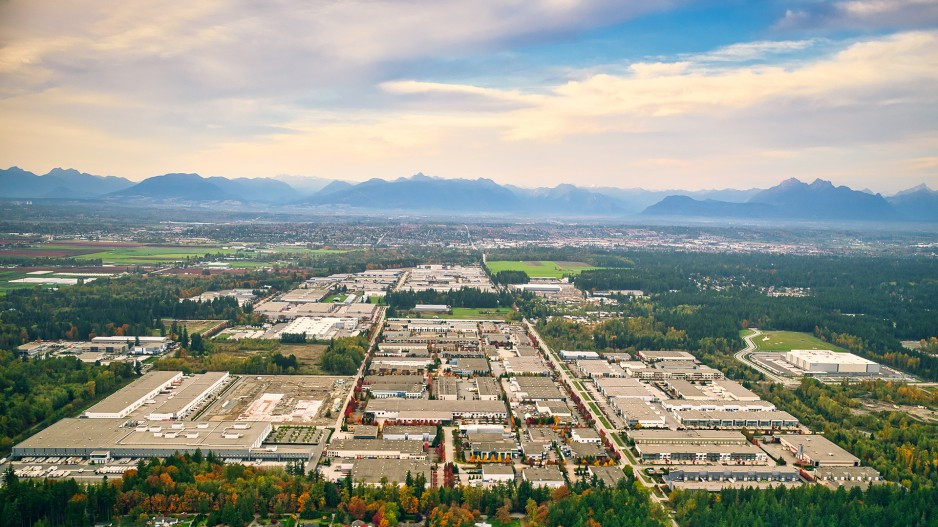
When standard industrial inventory cannot accommodate specialized operational requirements, build-to-suit transactions offer an alternative path. These arrangements allow occupiers to secure purpose-designed facilities while transferring development risk and capital requirements to a developer or landlord. In Metro Vancouver's supply-constrained industrial market, build-to-suit has become an increasingly relevant strategy for companies with specific spatial, operational, or locational needs that existing buildings cannot satisfy.
This guide explains how build-to-suit transactions are structured, when they make strategic sense, and what occupiers should consider when pursuing this approach in the current Metro Vancouver context.
What a Build-to-Suit Transaction Involves
A build-to-suit (BTS) transaction is an agreement where a developer or landlord constructs a facility according to an occupier's specifications, with the occupier committing to lease or purchase the completed building. The arrangement transfers development execution risk to the party with construction expertise while giving the occupier a facility tailored to their operational requirements.
BTS transactions typically follow one of two structures:
- Lease-based BTS: A developer or institutional landlord builds the facility and retains ownership. The occupier signs a long-term lease, typically 10 to 20 years, with rent structured to provide the landlord's required return on development cost. This is the more common structure in Metro Vancouver.
- Purchase-based BTS: A developer builds to the occupier's specifications with a pre-agreed purchase price. Upon completion, the occupier acquires the property. This structure requires the occupier to arrange acquisition financing and assume ownership responsibilities.
In both cases, the occupier participates in design decisions—building dimensions, clear height, column spacing, loading configuration, power infrastructure, and specialized systems—rather than adapting operations to an existing shell.
When Build-to-Suit Makes Strategic Sense
Build-to-suit is not the appropriate solution for every space requirement. The approach makes sense under specific circumstances:
Specialized operational requirements. Facilities requiring non-standard specifications—high power capacity for manufacturing, reinforced slabs for heavy equipment, extensive dock configurations for cross-dock distribution, or specialized ventilation systems—often cannot be efficiently retrofitted into existing buildings. Purpose-built construction avoids the compromise and cost of adapting inadequate structures.
Scale requirements exceeding available inventory. Metro Vancouver's existing industrial stock clusters heavily in the 10,000 to 50,000 square foot range. Occupiers requiring 150,000 square feet or more face limited options in the existing building inventory. BTS allows access to larger footprints, particularly in submarkets like Campbell Heights, Langley, and South Surrey where developable land remains.
Long-term operational certainty. Companies with stable, predictable space requirements over a 10 to 20-year horizon can justify the lead time and commitment of a BTS transaction. The resulting facility becomes a long-term operational asset rather than a short-term accommodation.
Market timing considerations. When vacancy rates are extremely low and existing options are limited or overpriced, BTS can provide access to space that simply is not available in the standing inventory. Metro Vancouver's industrial vacancy has hovered below 2% for extended periods, making BTS a practical necessity for some requirements.
Key Deal Terms and Negotiation Points
Build-to-suit transactions involve negotiation complexity beyond standard lease or purchase agreements. Several elements require careful attention:
Base building specifications. Clear documentation of the base building scope—structural specifications, mechanical systems, electrical capacity, site improvements, and finish levels—establishes what the landlord delivers versus what constitutes tenant improvement work. Ambiguity here creates cost disputes during construction.
Tenant improvement allowances and excess costs. BTS economics typically include a baseline finish level. Occupier-requested upgrades beyond this baseline—enhanced HVAC, specialized flooring, additional electrical infrastructure—become tenant-funded costs, either paid directly or amortized into rent.
Rent determination. BTS rents are calculated based on total development cost (land, construction, soft costs, and developer return) rather than market comparables. Current construction costs in Metro Vancouver for quality industrial buildings range from $250 to $350 per square foot depending on specifications. With land costs in established submarkets ranging from $2.5 million to $4.5 million per acre, BTS rents in locations like Richmond, Burnaby, or Vancouver-proper often exceed $25 to $30 per square foot triple-net. Campbell Heights and Langley BTS rents typically fall in the $18 to $24 range depending on specifications.
Delivery timeline and delay provisions. Construction timelines in Metro Vancouver have been subject to permitting delays, labour availability constraints, and supply chain disruptions in recent years. Lease commencement tied to substantial completion dates, along with provisions addressing material delays, protects occupiers from open-ended waiting periods.
Lease term and renewal options. Landlords require lease terms sufficient to amortize development costs and achieve target returns—typically 12 to 20 years for BTS transactions. Occupiers should negotiate renewal options with predetermined rent adjustment mechanisms to maintain long-term occupancy certainty.
Site Selection and Submarket Considerations
Build-to-suit feasibility varies significantly across Metro Vancouver submarkets based on land availability, zoning, and development economics:
Campbell Heights and South Surrey remain the primary locations for ground-up industrial development, with serviced lots available and municipal support for industrial growth. BTS activity here has been substantial, with several major distribution facilities completed in recent years.
Langley and Aldergrove offer development potential along the Highway 1 corridor, with somewhat lower land costs than Campbell Heights. Agricultural Land Reserve boundaries constrain expansion, but infill development continues on industrially-zoned parcels.
Richmond and Delta have limited remaining developable land, but periodic redevelopment opportunities emerge. Tilbury area sites offer potential for larger-footprint BTS projects where land can be assembled.
Vancouver-proper, Burnaby, and inner-ring municipalities have minimal land for new construction. BTS in these locations typically involves redevelopment of underutilized sites, adding significant complexity and cost.
Site selection for BTS must account for zoning compliance, servicing capacity, access to transportation infrastructure, and alignment with municipal industrial land policies. Pre-zoned sites with existing services reduce timeline and approval risk.
Timeline and Process Expectations
Build-to-suit transactions require substantially longer lead times than leasing existing space. A realistic timeline in Metro Vancouver includes:
- Site identification and due diligence: 2 to 4 months
- Letter of intent and lease negotiation: 2 to 4 months
- Design development and permitting: 6 to 12 months, depending on municipal processes
- Construction: 10 to 16 months for typical industrial facilities
Total lead time from initial engagement to occupancy commonly ranges from 20 to 36 months. Occupiers must plan space requirements well in advance of existing lease expirations or operational expansion timelines.
Practical Considerations for Metro Vancouver Occupiers
Build-to-suit transactions represent a significant commitment requiring careful evaluation. Before pursuing this path, occupiers should assess whether their requirements genuinely exceed what existing inventory can accommodate, whether their operational timeline allows for extended development periods, and whether their business outlook supports 10 to 20-year facility commitments.
Working with advisors experienced in BTS transaction structuring—including commercial real estate brokers, construction consultants, and legal counsel—helps navigate the complexity of these arrangements. NAI Commercial Vancouver's access to the NAI Global network provides perspective on BTS structures and market practices across North American industrial markets, informing negotiations and benchmarking deal terms.
For occupiers with specialized requirements and long-term operational certainty, build-to-suit remains one of the few reliable paths to securing appropriate space in Metro Vancouver's constrained industrial market.