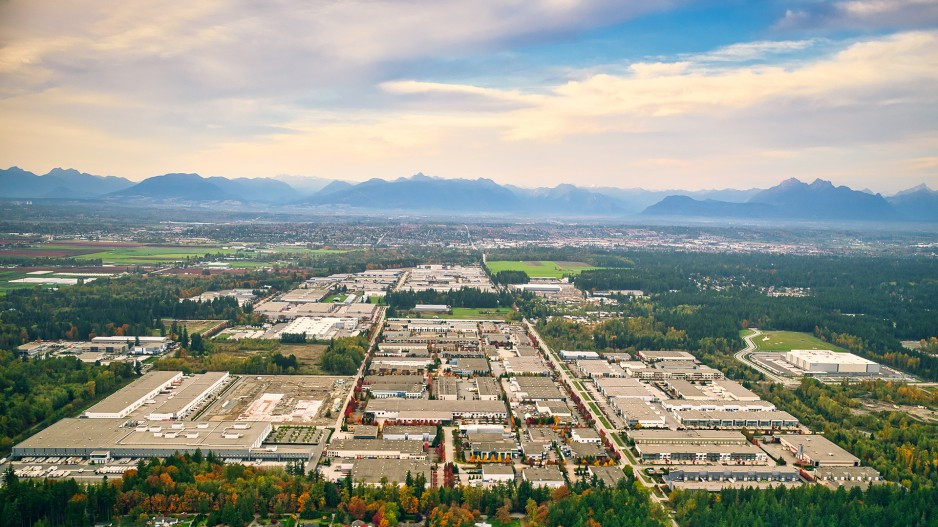
Vancouver-proper represents the most supply-constrained industrial submarket in Metro Vancouver, and arguably one of the tightest urban industrial markets in North America. For owners, occupiers, and investors operating within city limits, understanding the unique dynamics at play is essential for informed decision-making in 2024 and beyond.
Geographic Boundaries and Inventory Characteristics
When we refer to Vancouver-proper industrial, this means the industrial zones contained within the City of Vancouver municipal boundaries, distinct from the broader Metro Vancouver region that includes Burnaby, Richmond, Surrey, and the Fraser Valley. The primary industrial nodes include:
- False Creek Flats: The city's largest contiguous industrial area, bounded roughly by Main Street, Clark Drive, Great Northern Way, and the waterfront rail yards
- Mount Pleasant: A mixed industrial-commercial zone experiencing significant transition pressure
- Strathcona: Heritage industrial buildings with smaller bay sizes, popular among creative and light manufacturing users
- South Vancouver: Scattered pockets along Marine Drive and Kent Avenue, primarily serving last-mile distribution
- Railtown: Small-format heritage industrial spaces increasingly converted to commercial use
Total industrial inventory in Vancouver-proper sits at approximately 15 to 17 million square feet, a figure that has remained essentially flat for over a decade due to near-zero new supply and ongoing conversions to non-industrial uses. By comparison, the entire Metro Vancouver industrial market comprises roughly 230 million square feet, meaning Vancouver-proper accounts for less than 8 percent of regional inventory despite its central location.
Current Lease Rates and Vacancy Conditions
Vancouver-proper commands the highest industrial lease rates in the region, reflecting its scarcity premium and strategic positioning for urban distribution. As of late 2024, asking lease rates for Vancouver-proper industrial space generally fall within these ranges:
- Warehouse and distribution (10,000+ SF): $22.00 to $28.00 per square foot net
- Small-bay industrial (2,000 to 10,000 SF): $24.00 to $32.00 per square foot net
- Flex industrial with office component: $26.00 to $35.00 per square foot net
- Heritage or character industrial: $28.00 to $38.00 per square foot net, depending on condition and permitted uses
These rates represent a 30 to 50 percent premium over suburban alternatives in Surrey, Delta, or Langley, where comparable warehouse space trades in the $16.00 to $22.00 per square foot range. The premium is justified for tenants requiring same-day delivery capabilities within Vancouver's urban core, proximity to the Port of Vancouver container terminals, or access to a concentrated workforce.
Vacancy in Vancouver-proper industrial remains exceptionally tight, hovering between 1.0 and 2.0 percent through most of 2024. Functionally, this means occupiers face a market with virtually no options. Most transactions occur off-market or through lease assumptions rather than traditional listing processes.
Rezoning Pressures and the Shrinking Industrial Land Base
The defining characteristic of Vancouver-proper industrial is not simply scarcity. It is active erosion of the industrial land base through municipal policy decisions. The City of Vancouver's Broadway Plan, adopted in 2022, redesignated significant portions of the False Creek Flats and Mount Pleasant for mixed-use development, prioritizing housing density over industrial preservation.
While the city has implemented Industrial Land Use policies intended to protect core employment lands, the practical effect has been a two-tier market:
- Protected industrial zones: Properties within designated I-2 and M-2 zones that retain long-term industrial use permissions, commanding premium values from investors seeking durable income streams
- Transition zones: Properties in areas subject to potential rezoning, where owners face strategic decisions about holding for development optionality versus maximizing current industrial income
For occupiers, this bifurcation creates uncertainty. A five or ten-year lease commitment in a transition zone carries the risk of displacement if the property is sold for redevelopment. Due diligence on zoning status and ownership intentions has become a critical component of any lease negotiation in Vancouver-proper.
Tenant Profile and Demand Drivers
The tenant base in Vancouver-proper industrial differs meaningfully from suburban markets. High lease rates and limited space naturally filter out cost-sensitive users, leaving a concentration of tenants for whom urban location is operationally essential:
- Last-mile logistics: Couriers, parcel delivery services, and e-commerce fulfillment operators serving the downtown core and surrounding residential neighbourhoods
- Food and beverage production: Craft breweries, bakeries, commissary kitchens, and food distributors requiring proximity to restaurants, hotels, and retail customers
- Film and television production: Vancouver's robust film industry generates steady demand for sound stages, prop storage, and production support facilities
- Creative and technology users: Design studios, prototyping facilities, and hardware technology companies valuing the aesthetic and workforce advantages of urban industrial space
- Building trades and service contractors: Electrical, plumbing, HVAC, and mechanical contractors requiring central locations to minimize travel time across job sites
Notably absent from Vancouver-proper are the large-format distribution users (third-party logistics providers, major retailers, and wholesale distributors) that drive absorption in suburban markets like Campbell Heights, Tilbury, or Port Kells. These users simply cannot justify the lease rate premium when their operations do not require an urban address.
Investment Considerations and Cap Rate Dynamics
From an investment perspective, Vancouver-proper industrial assets trade at cap rates that reflect both income security and redevelopment optionality. Stabilized multi-tenant industrial properties in protected zones have traded in the 4.00 to 4.75 percent cap rate range, among the lowest in Metro Vancouver. Single-tenant assets with shorter lease terms or properties in transition zones may trade at 4.75 to 5.50 percent, reflecting execution risk.
The strata industrial market provides an alternative entry point for owner-occupiers and smaller investors. Strata industrial units in Vancouver-proper, where available, typically price between $600 and $900 per square foot, a significant premium over suburban strata options in Burnaby or Richmond ranging from $450 to $650 per square foot.
For institutional investors and REITs, Vancouver-proper industrial offers income durability and inflation protection through embedded lease rate growth. NAI Commercial Vancouver has observed increasing interest from cross-border capital, facilitated through the NAI Global network, targeting Vancouver-proper industrial as a stable allocation within broader Canadian portfolios.
Strategic Takeaways for Market Participants
Vancouver-proper industrial occupies a distinct niche within the Metro Vancouver market hierarchy. It is not competing with suburban alternatives on cost. It is serving users for whom urban location creates measurable operational value exceeding the lease rate premium.
For owners, the strategic imperative is understanding your property's zoning status and long-term designation. Assets in protected industrial zones represent durable income-producing investments with limited downside risk. Properties in transition areas require active monitoring of municipal policy and potentially opportunistic disposition timing.
For occupiers, securing space in Vancouver-proper demands flexibility, speed, and realistic rate expectations. The days of negotiating significant concessions are behind us in this submarket. Tenants should anticipate competitive processes for quality availabilities and consider longer lease terms to lock in current rates against future escalation.
For investors, Vancouver-proper industrial offers a compelling risk-adjusted return profile anchored by irreplaceable location and structural supply constraints. The challenge lies in sourcing opportunities in a market where most transactions occur through relationships rather than public marketing, underscoring the value of established brokerage networks with deep local market intelligence.