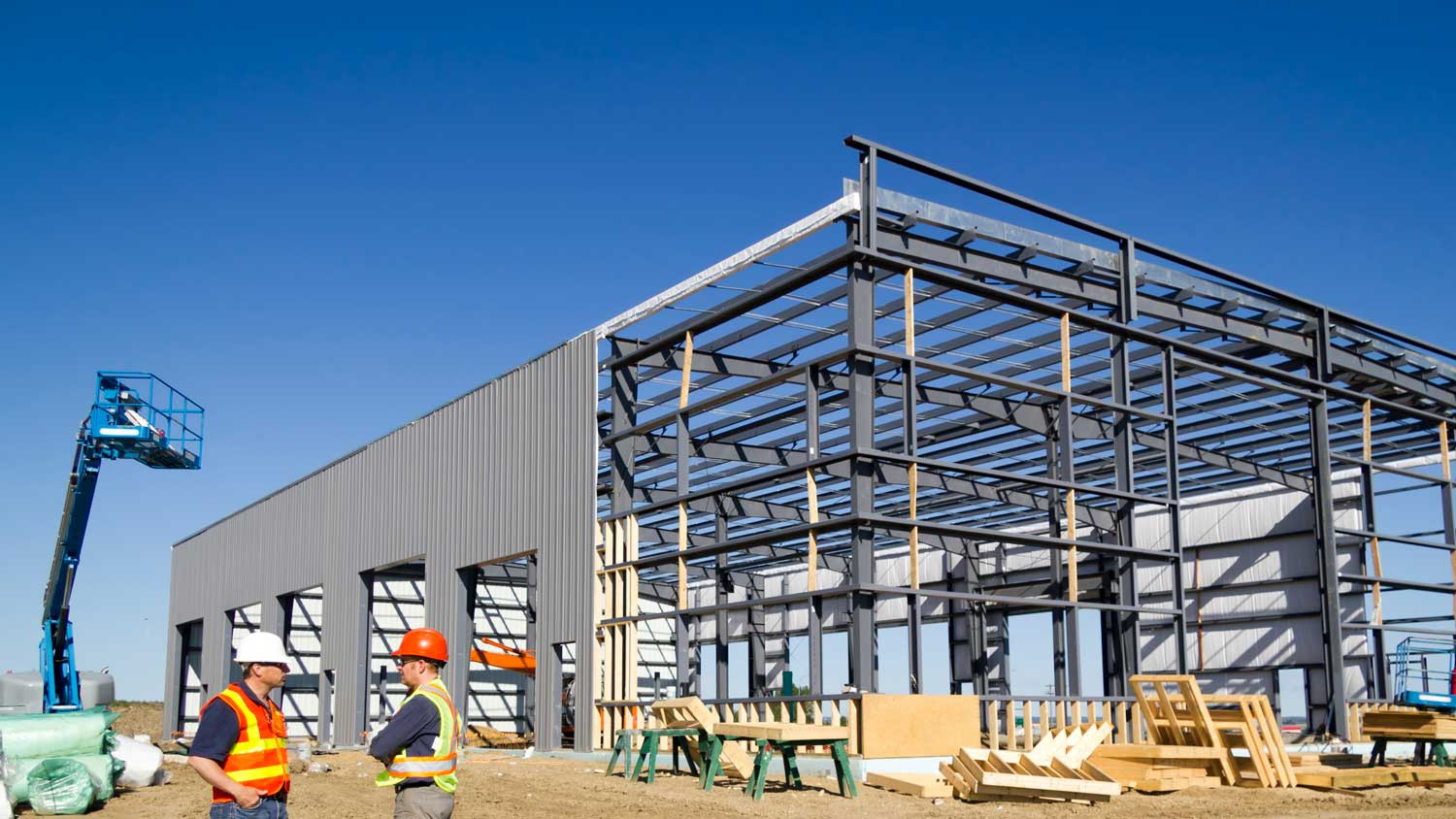
For businesses that have outgrown leasing or want to build equity through real estate ownership, purchasing an industrial property represents a significant strategic decision. In Metro Vancouver's constrained industrial market, where asking prices for functional warehouse and manufacturing space routinely exceed $500 per square foot in core submarkets, financing structure can determine whether a transaction proceeds or stalls.
This guide examines the financing landscape for owner-occupiers acquiring industrial property in Greater Vancouver, including lending options, qualification criteria, and structuring considerations that can improve both approval odds and long-term financial outcomes.
The Owner-Occupier Advantage in Commercial Lending
Lenders view owner-occupied commercial real estate more favorably than pure investment property. When a business operates from premises it owns, the property generates operational value beyond rental income—creating additional incentive for the borrower to maintain payments during challenging periods.
This risk perception translates into tangible benefits:
- Higher loan-to-value ratios: Owner-occupiers can typically secure 75% LTV financing, compared to 65-70% for investment properties
- More competitive interest rates: Spreads for owner-occupied industrial are generally 25-50 basis points tighter than equivalent investment deals
- Longer amortization periods: 25-year amortizations are standard for owner-users, improving cash flow compared to 20-year investment terms
- Greater flexibility on property type: Lenders show more appetite for specialized or single-purpose facilities when the borrower operates the business
In Metro Vancouver's current environment, where a 10,000 square foot industrial strata unit in Richmond or Burnaby might transact between $5.5 million and $7 million, these differences materially impact monthly carrying costs and required equity.
Financing Sources for Metro Vancouver Industrial Purchases
Owner-occupiers have several financing channels available, each with distinct characteristics:
Schedule I Banks (Big Six)
Canada's major banks remain the primary source for owner-occupied commercial mortgages. They offer competitive rates, typically pricing at prime plus 0.75% to 1.5% for qualified borrowers, with five-year terms being most common. Qualification requirements are rigorous: most require three years of financial statements, debt service coverage ratios of 1.25x or higher, and demonstrated industry experience. Processing times of 60-90 days are typical.
Credit Unions
BC credit unions—including Coast Capital, Vancity, and Westminster Savings—have carved out meaningful market share in owner-occupied industrial lending. They often show greater flexibility on newer businesses or non-standard situations, though rates may run 25-50 basis points higher than Schedule I banks. Their local market knowledge can be advantageous when financing properties in emerging industrial nodes like Campbell Heights or Langley.
Business Development Bank of Canada (BDC)
BDC serves a complementary role, often participating alongside conventional lenders or providing financing where traditional banks decline. Their rates are higher—typically prime plus 2% to 4%—but they accept higher LTV ratios (up to 90% in some cases) and show greater tolerance for businesses with shorter operating histories or transitional financials.
Canada Small Business Financing Program (CSBFP)
For qualifying businesses, the CSBFP provides government-backed loans up to $1 million for real estate purchases. The program caps interest rates at prime plus 3% and requires only modest down payments. However, the $1 million ceiling limits applicability in Metro Vancouver's industrial market, where even modest strata units frequently exceed this threshold.
Qualification Criteria and Documentation Requirements
Lenders evaluate owner-occupier applications across several dimensions:
Business Financial Health
Expect to provide three years of corporate financial statements, including income statements, balance sheets, and cash flow statements. Lenders calculate debt service coverage ratios (DSCR) based on normalized operating income—most require 1.20x to 1.30x minimum coverage, meaning the business must generate $1.20 to $1.30 in operating income for every $1.00 in proposed debt service.
Personal Guarantees
Virtually all owner-occupied commercial mortgages require personal guarantees from principals holding 25% or greater ownership. Lenders will assess personal net worth, credit history, and liquidity. Expect to provide personal financial statements, tax returns, and documentation of personal real estate holdings.
Down Payment and Source of Funds
A minimum 25% down payment is standard, though 30-35% strengthens applications significantly. Lenders scrutinize the source of equity—funds must be seasoned (typically 90 days in the borrower's account) and documented. Gifted funds, recent loans, or proceeds from unclear sources will trigger additional due diligence.
Property Considerations
The real estate itself undergoes independent appraisal and environmental review. Phase I Environmental Site Assessments are mandatory for industrial properties; Phase II investigations may be required if the Phase I identifies potential contamination. Properties with environmental concerns, deferred maintenance, or functional obsolescence may face reduced loan amounts or outright declines.
Structuring Considerations for Metro Vancouver Buyers
Several structuring decisions can improve financing outcomes:
Holding Company Structure
Most advisors recommend holding industrial real estate in a separate corporation from the operating business. This structure provides liability separation, facilitates future sale or succession planning, and enables the operating company to pay market-rate rent to the holding company—creating a defined income stream for the property.
Lease Agreement Between Related Entities
When structuring a holding company arrangement, establish a formal lease between the property-owning entity and the operating business. Lenders underwrite based on this lease income, so terms should reflect market rates and include appropriate escalation provisions. In current market conditions, industrial lease rates range from $18-24 PSF in suburban markets like Langley and Surrey to $28-38 PSF in Vancouver and Burnaby.
Term Selection
While five-year terms are standard, shorter terms (three years) may suit borrowers expecting significant business growth or planning to refinance, while longer terms (seven to ten years, where available) provide payment certainty. Rate differentials between terms have narrowed through 2026, making longer terms relatively more attractive than in previous years.
Prepayment Flexibility
Commercial mortgages typically include prepayment penalties—often calculated as the greater of three months' interest or an interest rate differential. Borrowers anticipating potential early repayment should negotiate prepayment privileges (commonly 15-20% annually) or understand penalty calculations before committing.
Timeline and Process Expectations
Owner-occupiers should budget 90 to 120 days from accepted offer to closing for a financed industrial purchase. Key milestones include:
- Pre-approval (2-4 weeks): Initial lender review of financial package and preliminary commitment
- Appraisal and environmental review (3-5 weeks): Third-party reports commissioned by the lender
- Underwriting and approval (2-4 weeks): Final credit adjudication and commitment letter
- Legal documentation and closing (2-3 weeks): Mortgage registration and funds disbursement
Sellers and their advisors understand these timelines. Subject removal periods of 45-60 days for financing conditions are standard in Metro Vancouver industrial transactions, though shorter periods may be required in competitive situations.
Practical Considerations for 2026 Buyers
Several market conditions shape the current financing environment. Interest rates have stabilized following the volatility of 2023-2024, with five-year commercial mortgage rates generally ranging from 5.25% to 6.50% depending on borrower strength and property quality. Lenders have returned to more normalized underwriting standards after the tightening that characterized the rate-hiking cycle.
Industrial property values in Metro Vancouver have held firm despite higher financing costs, supported by persistent supply constraints and steady occupier demand. This resilience has maintained lender confidence in the asset class, keeping credit availability robust for qualified borrowers.
For businesses evaluating ownership versus continued leasing, the analysis increasingly favors purchase where operational requirements align with available inventory. The combination of equity building, payment stability, and potential tax advantages makes owner-occupation financially compelling—provided the financing structure matches business cash flows and risk tolerance. Engaging qualified legal, tax, and real estate advisors early in the process ensures that structural decisions serve long-term objectives rather than simply facilitating the immediate transaction.